
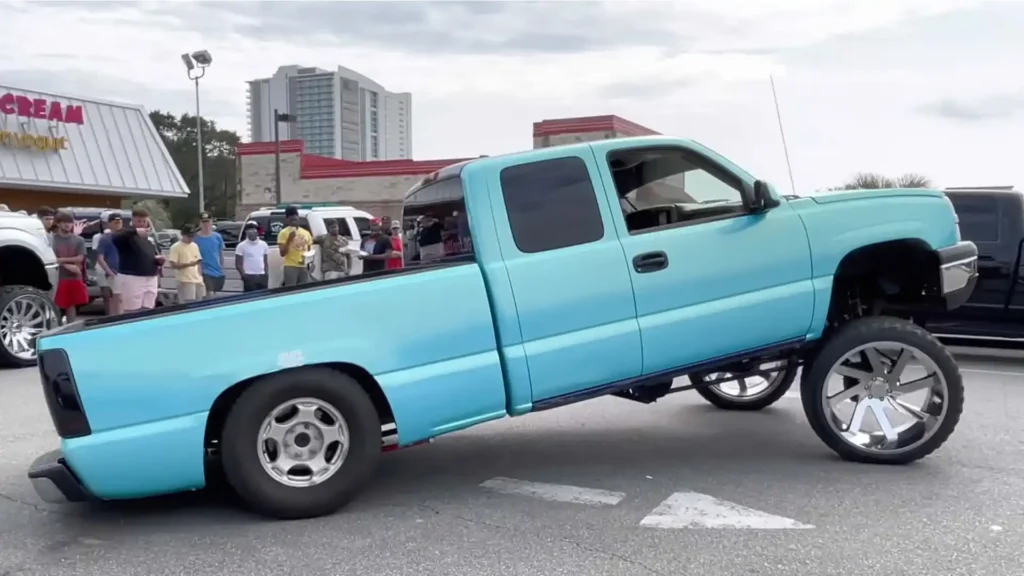
A squatted truck is a pickup or SUV modified so that its front sits noticeably higher than its rear, creating a nose-up “reverse rake.” Often called a Carolina Squat, the style is mainly an appearance-driven modification rather than a conventional lift or leveling setup. Extreme front-to-rear height differences can affect forward visibility, headlight aim, suspension geometry, and road legality, so owners should verify current state rules and have major ride-height changes inspected professionally.
النقاط الرئيسية
- A squatted truck has a front-high, rear-low stance. It is different from a factory rake, a leveling kit, or a conventional lift.
- “Carolina Squat,” “Cali Lean,” and similar names are informal terms. Vehicle laws usually rely on physical measurements, such as fender or bumper height.
- Extreme or poorly engineered suspension changes may affect visibility, headlights, alignment, tires, steering, and day-to-day usability.
- State rules vary. Before driving or modifying a truck, check the current law where it is registered and driven.
Legal Note
Legal note: This guide is for general information only and is not legal advice. Vehicle-modification laws, inspection rules, and enforcement practices can change. Verify the current requirements with your state legislature, DMV, highway patrol, or a qualified local professional before driving or modifying a vehicle.
What Is a Squatted Truck?
A squatted truck is a vehicle with a noticeable front-high, rear-low stance. The look may be created by raising the front suspension, lowering the rear suspension, or combining both changes. The resulting angle is often called a reverse rake because the front of the truck sits higher than the rear.
The Front-High, Rear-Low “Reverse Rake”
From the side, an extreme squatted truck can look as though it is parked on a steep uphill slope. The front fender gap may appear much larger than the rear, while the hood and headlights sit at a higher angle. The severity varies widely. Some vehicles show a mild rake, while others have a front-to-rear height difference large enough to raise safety and compliance questions.
Common Visual Features
Some show-oriented builds pair the stance with large wheels, low-profile tires, roof racks, exhaust modifications, or bed-mounted antennas. These accessories are not part of the definition of a squatted truck, however. The defining feature is the front-high, rear-low ride-height difference.
Carolina Squat, Cali Lean, and Other Informal Names
Carolina Squat, Carolina Lean, Cali Lean, California Lean, Baja stance, and similar labels are informal community terms. Their exact meaning can vary by region and truck community.
State laws usually do not regulate these nicknames. They regulate measurable conditions, such as front-to-rear fender or bumper height, overall bumper limits, lighting, or suspension modifications.
A truck can be described online as a “Cali Lean” and still violate a state rule that never uses that term. For compliance, the measurement method in the applicable law matters more than the style label.
Squatted Truck vs. Factory Rake vs. Leveling Kit
A squatted truck is different from a factory rake, a leveling kit, and a conventional lift. The main difference is how the front and rear ride heights change and why the modification is made.
| Setup | Typical front-to-rear stance | Primary purpose | Key consideration |
|---|---|---|---|
| Factory rake | Rear may sit slightly higher than the front | Helps account for passengers, cargo, and towing loads | Designed around the vehicle’s original suspension and load assumptions |
| Leveling kit | Front and rear sit closer to the same height | Reduces the factory rear-high appearance | Still requires vehicle-specific parts, alignment, tire-clearance checks, and legal compliance |
| Conventional lift | Front and rear are generally raised together | May create tire clearance or serve specific off-road use cases | Must be matched to suspension components, brakes, steering, lighting, and local height rules |
| Squatted truck | Front sits noticeably higher than the rear | Primarily a style or show-truck stance | Can raise visibility, headlight, practical-use, and legal concerns when extreme |
A factory rake and a leveling kit should not be confused with a Carolina Squat. Factory rake usually leaves the rear slightly higher to help a truck remain more level when carrying cargo or towing. A leveling kit generally raises a factory-low front end to bring the truck closer to level. A conventional lift usually raises both ends of the vehicle, depending on the suspension design and kit. A squatted truck creates the opposite visual effect by making the front sit higher than the rear.
Why Did the Carolina Squat Become Popular?
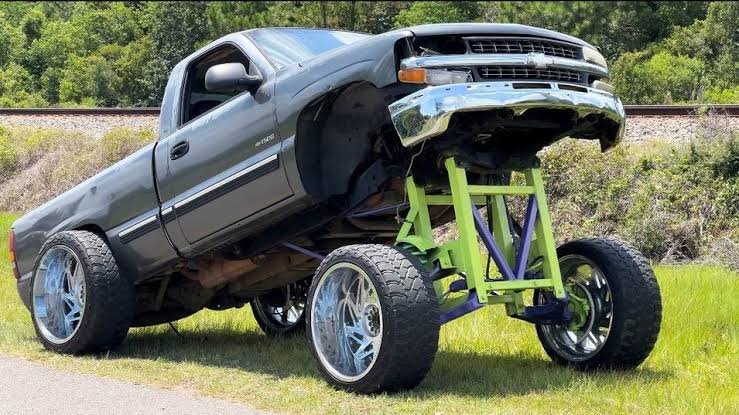
The Carolina Squat is often discussed alongside Baja-inspired and prerunner truck aesthetics. Purpose-built desert-race vehicles may use specialized suspension systems designed around high-speed terrain, suspension travel, dynamic load transfer, and impact absorption. In some setups or driving conditions, those vehicles can appear nose-high.
That visual similarity does not make a street-style Carolina Squat a race suspension setup. Modern squatted trucks are generally built for appearance, while race and prerunner vehicles are engineered for specific off-road conditions, components, loads, and speeds.
From Regional Truck Culture to a National Trend
The modern street-truck style became strongly associated with regional truck communities in the United States, especially in parts of the Southeast. Names such as Carolina Squat and Cali Lean reflect those regional associations, although use of the terms is not standardized.
Truck meets, custom-build culture, short-form video, and social platforms gave the look a wider audience. For many owners, the appeal is visual: an exaggerated silhouette, distinctive wheel fitment, and a recognizable show-truck identity rather than a measurable performance gain.
The style also became easier to recognize and share online. Photos and short videos can highlight the front-high, rear-low stance from a side angle, making the modification easy for other truck enthusiasts to identify and discuss.
The appeal is subjective. Some enthusiasts see the stance as a form of personalization and local truck-scene identity; others consider it impractical or unsafe for public-road use. That disagreement is part of why the Carolina Squat has attracted so much attention.
Are Squatted Trucks Illegal? State-by-State Laws
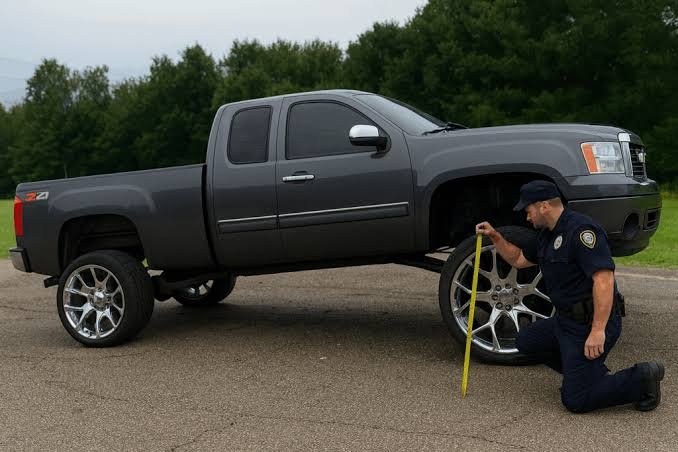
A squatted truck is not automatically illegal in every state. However, several states have laws that restrict extreme front-to-rear suspension or vehicle-height modifications on public roads. The rules vary by state, and the measurement method matters. Some laws use fender height, while others regulate bumper height, frame height, body height, or suspension modifications.
The table below focuses on states with specific restrictions that can directly affect a squatted truck or a similar front-high, rear-low modification. Always check the current statute before modifying or driving a vehicle.
States With Specific Squatted Truck and Suspension Restrictions
| State | Restriction | القياس | Penalties / consequence | Effective date | Primary source |
|---|---|---|---|---|---|
| North Carolina | A covered private passenger automobile may not be operated on a highway or public vehicular area if suspension, frame, or chassis modifications make the front fender 4 in. or more higher than the rear fender. | Vertical fender measurement through the wheel centerline, as defined by statute | A third or subsequent qualifying conviction within the preceding 12 months triggers license revocation for at least 1 year. See the current statute for complete penalty language. | Dec. 1, 2021 | North Carolina HB 692 (ratified bill) |
| Virginia | A passenger car, pickup, or panel truck may not be operated on a public highway if the front bumper is 4 in. or more higher than the rear bumper. Separate bumper-height and body-height limits also apply. | Bumper height; truck ranges vary by GVWR | Bumper ranges vary by vehicle type and GVWR. A court may dismiss a summons if proof of compliance is provided on or before the court date. | Current law | Virginia Code §46.2-1063 |
| South Carolina | A “squatted” vehicle includes one with a front or rear fender raised 4 in. or more higher than the other. | Fender height | $100 first offense; $200 second; $300 third offense plus a 12-month license suspension from the date of conviction. | Effective Nov. 12, 2023; citations began May 10, 2024 | South Carolina “Carolina Squat” Law (SCDPS) |
| Louisiana | A motor vehicle may not be operated on a highway if modifications make the front fender 6 in. or more higher than the rear fender. | Vertical fender measurement through the wheel centerline | Applies only to vehicles with no payload and no trailer attached. See current enforcement provisions for penalties. | Aug. 1, 2022 | Louisiana Revised Statutes §32:381.1 |
| Mississippi | A passenger motor vehicle, including pickups, may not be operated on state streets or highways if modifications make the front fender 4 in. or more higher than the rear fender. | Vertical fender measurement through the wheel centerline | Misdemeanor: $100 first, $200 second, $300 third/subsequent + 12-month license suspension. Only offenses within five years count as prior offenses. | Law effective July 1, 2024; penalty tickets began Jan. 27, 2025 | Mississippi 2024 statute text (§63-7-105) |
| Arkansas | A passenger car, pickup truck, SUV, or panel truck may not be operated on a public highway or street if modifications make the front bumper at least 4 in. higher than the rear bumper. | Bumper height | $250 first offense in 12 months; $500 second/subsequent in 12 months; third offense in 12 months also carries a 12-month license suspension. | Approved and effective Apr. 8, 2025 | Arkansas Act 492 of 2025 (SB 411) |
North Carolina’s statute defines the prohibited modification using a 4-inch front-fender difference and provides for license revocation of at least one year after a third or subsequent qualifying conviction within the specified 12-month period.
Virginia uses a different approach. Its current code sets bumper-height limits by vehicle type and GVWR, limits body height above the frame rail, and separately prohibits a passenger car or pickup/panel truck from having a front bumper 4 or more inches higher than the rear bumper.
Louisiana uses a 6-inch front-fender difference and specifies that the rule applies when the vehicle has no payload and no trailer attached. Mississippi uses a 4-inch fender difference and defines the measurement through the centerline of the wheel. Its statute sets escalating fines of $100, $200, and $300, with a 12-month license suspension for a third or subsequent offense.
Arkansas takes a bumper-based approach. Act 492 applies to passenger cars, pickups, SUVs, and panel trucks and prohibits a modified front bumper from being at least 4 inches higher than the rear bumper. The statute sets fines of $250 for a first offense and $500 for a second or subsequent offense within 12 months, with a 12-month license suspension for a third offense within that period.
Other Height and Equipment Rules May Still Apply
Some states do not use a dedicated “squatted truck” statute but may still enforce general rules involving bumper height, frame height, headlights, tire coverage, suspension alterations, or required inspections. These rules should not be described as a statewide Carolina Squat ban unless the statute expressly creates that restriction.
Georgia is an example of a state where general frame-height and vehicle-equipment rules can matter for modified trucks. Because the applicable requirements can depend on vehicle weight rating, equipment, and statutory exemptions, confirm the current state code or obtain local professional guidance before relying on an online summary.
If you travel across state lines, check the rules in every state where the vehicle will be operated—not only the state where it is registered.
What About Alabama?
Alabama has considered legislation related to extreme front-to-rear fender-height differences in recent sessions. A proposed bill is not the same as an enforceable statewide law. For example, Alabama legislation has proposed a 4-inch front-fender difference rule, but the existence of a bill does not by itself create a statewide restriction.
Check the Alabama Legislature and the current vehicle-equipment code for the latest status before modifying or driving a vehicle.
Check the Rule Before You Modify or Drive
Use the current statute—not a social-media photo or another owner’s experience—to evaluate a modified truck. First, identify the exact measurement point used in your state. Next, measure the vehicle on level ground and compare the result with the applicable rule. Then check related requirements, including bumper limits, headlight aim, tire clearance, required inspection, and any restrictions on suspension modifications.
A truck that appears modestly modified can still be noncompliant if it exceeds the specific measurement in the law.
Last legal review: September 9, 2026. Laws and enforcement policies can change. Verify the current rule with an official state source before acting.
Safety and Practical Concerns With Squatted Trucks
A safety concern is not the same as a proven nationwide crash statistic. National crash databases do not generally classify “squatted truck” as a separate vehicle category, so there is limited data that isolates this specific stance. The practical impact depends on the vehicle, the amount of ride-height change, the parts installed, the quality of the work, and whether the truck has been inspected and adjusted afterward.
Still, an extreme front-high, rear-low stance can create identifiable concerns that owners should address before using a vehicle on public roads.
Forward Visibility and Headlight Aim
Raising the front of a truck can change the driver’s view of the area directly ahead of the vehicle. This matters most around pedestrians, children, curbs, small vehicles, and low obstacles in parking lots or residential areas.
Ride-height changes can also alter the original headlight beam angle. If headlights are not inspected and aimed after suspension work, they may illuminate the road poorly or create glare for oncoming traffic. Headlight aim should be checked after any significant change in ride height.
Suspension Geometry, Alignment, and Everyday Handling
A truck’s suspension, steering, tires, brakes, and electronic safety systems are designed to work together within a particular ride-height range. A large front-to-rear change can alter alignment settings, suspension travel, steering angles, and tire contact behavior.
The result is vehicle-specific. A mild, properly engineered change is not the same as an extreme build with poorly matched components or incorrect alignment. After significant suspension work, a qualified shop should inspect steering and suspension parts and provide a wheel-alignment check.
Components That May Need Inspection
Depending on the vehicle and suspension design, a major front lift or uneven rake may require inspection of:
- CV axle angles
- Ball joints and control arms
- Tie rods and steering linkage
- Driveshaft and U-joint angles
- Brake-hose routing and suspension travel
- Tire clearance at full steering lock and suspension compression
- Wheel alignment and uneven tire wear
- Headlight aim
These parts do not fail automatically because a truck has been modified. The point is to confirm that the parts are operating within appropriate limits for the specific vehicle and installation.
Virginia Crash and the Public Safety Debate
A fatal crash in Virginia brought additional public attention to squatted trucks and was discussed during the state’s legislative debate. Reports indicated that investigators examined whether modifications to the involved vehicle may have contributed to the crash.
That case should not be treated as proof that every squatted truck causes a crash. It does illustrate why lawmakers and road users have focused on visibility, vehicle equipment, and extreme ride-height differences. When discussing individual incidents, separate what investigators examined from what an official investigation or court has conclusively established.
What the Evidence Does—and Does Not—Show
The available evidence supports evaluating a modified truck by its actual configuration rather than assuming every vehicle has the same outcome. Extreme rake, incorrect headlight aim, poor alignment, incompatible parts, worn steering components, and unsafe tire clearance can create real risks.
At the same time, national data does not isolate squatted trucks as a separate crash category. The most responsible approach is to assess visibility, lighting, suspension geometry, alignment, tires, steering, brakes, and legal compliance for the specific vehicle.
| Area to check | Why it matters |
|---|---|
| Forward visibility | A high front end can make low objects near the front harder to see |
| Headlight aim | Ride-height changes may alter beam direction and create poor road lighting or glare |
| Alignment and tires | Incorrect geometry can affect tire wear, steering response, and stability |
| Suspension and steering | Modified angles may require component and travel checks |
| Towing and payload use | Hitch attitude, visibility, suspension travel, and handling should be reassessed |
| Legal compliance | Fender, bumper, lighting, and inspection rules vary by state |
A modified truck should be checked after major suspension work and maintained according to the requirements of its specific setup. Owners should also verify that the vehicle meets the laws that apply where it is driven.ires, and steering components after major modifications. A truck should also meet the vehicle laws in the state where it is driven.
What Does It Cost to Correct a Squatted Truck or Change Ride Height?
The total cost of correcting a squatted truck or changing ride height depends on the vehicle, the parts already installed, the amount of correction required, labor rates, and whether the truck also needs alignment, headlight adjustment, tires, or component repairs. A low parts price is not the same as the total cost of a safe, vehicle-specific, road-ready installation.
What Affects the Cost of Returning to a Compliant Setup?
The cost can vary from one truck to another because the existing suspension, previous modifications, and condition of the vehicle may be different. Before approving the work, ask the shop to identify the parts that need to be removed, replaced, adjusted, or inspected.
| Cost factor | Why it varies | What to ask before approving work |
|---|---|---|
| Suspension components | Vehicle platform, existing parts, and amount of correction needed | Are these parts made for my year, make, model, trim, and drivetrain? |
| Removal and installation labor | Rust, prior modifications, accessibility, and repair needs | Does the estimate include removing old or incompatible parts? |
| Wheel alignment | Geometry and tire specifications differ by vehicle | Is a before-and-after alignment report included? |
| Headlight inspection and aiming | Correcting ride height may change beam direction | Will headlights be checked and adjusted after the work? |
| Tires and wheels | Existing tires may have uneven wear or clearance problems | Are load rating, offset, and full-lock clearance appropriate? |
| Inspection or compliance work | Requirements differ by state and locality | Which legal measurement and inspection rules apply to my truck? |
There is no single price for every squatted truck or ride-height correction. A proper estimate should consider the specific vehicle, current suspension setup, required changes, parts condition, and local labor rates.
Think Beyond the Initial Installation
Long-term cost can include tire replacement, alignment checks, worn suspension or steering components, inspection-related corrections, and resale considerations. A truck with undocumented or poorly executed suspension work may also be harder for a future buyer or insurer to evaluate.
Keep records of parts, installation, alignment, headlight checks, and any inspection work. Clear documentation can make maintenance, insurance conversations, and resale easier.
For a significantly modified truck, a professional inspection before and after the work can also help identify parts that need attention and confirm that the final setup is appropriate for the vehicle.
How to Return a Squatted Truck to a Safer, More Compliant Setup
If a truck has an extreme front-high, rear-low stance, the safest path is to evaluate the vehicle against the current legal measurement in the state where it is driven and then correct the suspension as needed. Returning to stock ride height is often the simplest option, but a vehicle-specific compliant setup may also be appropriate when installed and inspected correctly.
1. Measure the Truck Using the Applicable State Standard
Measure the truck on level ground using the exact points specified in the applicable law. Depending on the state, that may mean the bottom of the fender at the wheel centerline, bumper height, frame height, or another defined point.
Do not rely on visual appearance alone. A truck may look relatively level while still exceeding a specific legal measurement, or appear highly modified while using a measurement method that produces a different result.
2. Restore Stock Ride Height or Choose a Vehicle-Specific Compliant Setup
Returning to the original suspension configuration is often the clearest way to reduce uncertainty. If you choose a leveling or lift setup instead, use parts designed for your exact vehicle and confirm that the finished configuration meets the relevant state rules.
An adjustable suspension system is not automatically compliant. The vehicle must still meet applicable fender, bumper, lighting, and equipment requirements at the time and place it is operated.
3. Complete the Safety Checks After Ride-Height Changes
After any major ride-height correction, have a qualified shop check:
- Wheel alignment
- Headlight aim
- Tire clearance at full steering lock and suspension compression
- Steering and suspension components
- Brake hoses and related hardware
- Tire wear and inflation condition
- Any state-required inspection items
Keep the alignment and inspection records with the vehicle. These records can help document the work performed and make future maintenance or compliance checks easier.
4. Reassess Towing, Payload, and Cross-State Travel
Do not assume the truck is ready for towing or heavy payloads simply because it now looks more level. Check the manufacturer’s guidance, hitch position, suspension travel, tire capacity, visibility, and vehicle handling before towing.
If you regularly travel across state lines, verify the rules in every state where the truck will be driven. Vehicle-height limits and measurement methods can differ between states, so compliance in the state where the truck is registered does not necessarily mean the vehicle meets the requirements everywhere it is operated.
Can a Squatted Truck Affect Insurance?
Major suspension changes may affect how an insurer evaluates coverage, premiums, modifications, or claims. Requirements vary by insurer and policy, so contact the insurer before making a major change and ask whether aftermarket suspension parts must be disclosed.
Keep receipts, part numbers, installation records, alignment reports, and inspection documents. These records can help document the vehicle’s condition and modification history.
Make Daily Cab Entry Easier After Restoring Ride Height
Returning a truck to stock height or a more compliant suspension setup can improve everyday drivability, but getting into the cab may still be difficult on many pickups and SUVs. This can be especially noticeable for children, older passengers, or anyone carrying tools and gear.
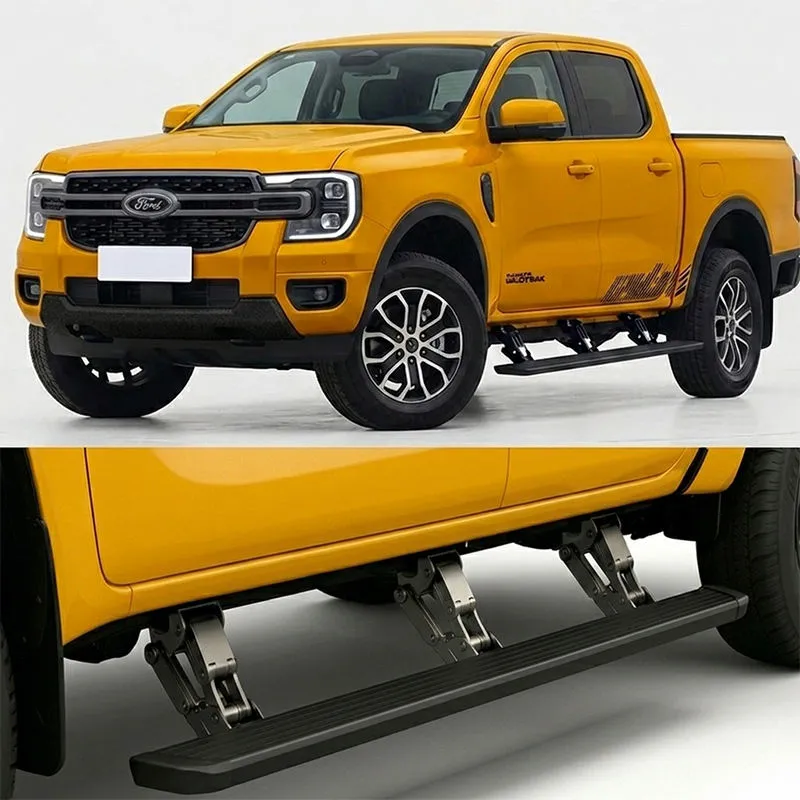
A vehicle-specific running board can add a stable step without changing the truck’s suspension height again.
Why Retractable Power Running Boards Can Help
Retractable power running boards deploy when a door opens and retract closer to the vehicle when the door closes. That can make cab entry easier while keeping the step tucked away during driving.
Before choosing a running board, confirm fitment for the vehicle’s year, make, model, cab configuration, drivetrain where applicable, and any existing accessories. The goal is to improve access without creating another suspension, clearance, or compatibility issue.
MAX Vehicle-Specific Power Running Boards
MAX Running Boards offers vehicle-specific power running board options for many truck and SUV applications, including Ford, Chevrolet, GMC, RAM, Toyota, Nissan, Jeep, ، و Mitsubishi models.
Browse the compatible vehicle-specific power running boards for your vehicle or contact MAX Running Boards for fitment guidance based on your model year, cab configuration, and existing modifications.
الخلاصة
A squatted truck has a front-high, rear-low stance often associated with the Carolina Squat. While the look has become part of truck customization culture, extreme front-to-rear rake can create practical concerns involving visibility, headlight aim, suspension geometry, tire wear, and road compliance.
The right next step is not to rely on photos, social-media claims, or another owner’s setup. Check the current rule in the states where you drive, measure the vehicle using the correct standard, and have major suspension changes inspected professionally. If you restore a more practical ride height and need easier access to the cab, choose a vehicle-specific running board solution rather than changing the suspension again.
Need help finding a vehicle-specific power running board? اكتشف عتبات MAX by vehicle or contact the team for fitment guidance.
