
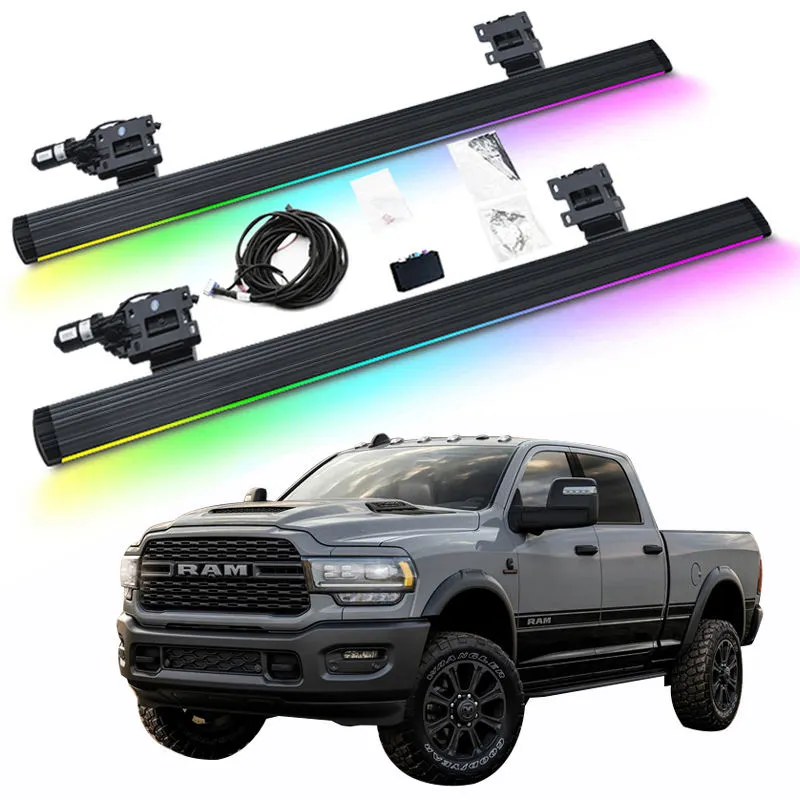
Are powered running boards worth it? For many SUV and pickup truck owners, the answer depends on how often you use the vehicle, how high it sits, and what you expect from a running board.
Powered running boards can make daily entry and exit easier. The boards extend when you open the door and retract under the vehicle when you close it. This gives passengers a lower step without leaving a large running board outside the vehicle all the time.
But the price is higher than a fixed running board. The motor, wiring, control system, and moving parts also add more components to the vehicle. So, are power running boards worth the money? Are electric running boards worth it for your truck or SUV?
This guide looks at the main factors that affect the answer. We will compare the benefits, cost, reliability, installation, maintenance, and vehicle fit. We will also look at different vehicle types, including stock-height and lifted trucks.
By the end, you should have a clearer idea of whether powered running boards are a good upgrade for your vehicle and your daily driving needs.
Are Power Running Boards Worth It? The Short Answer
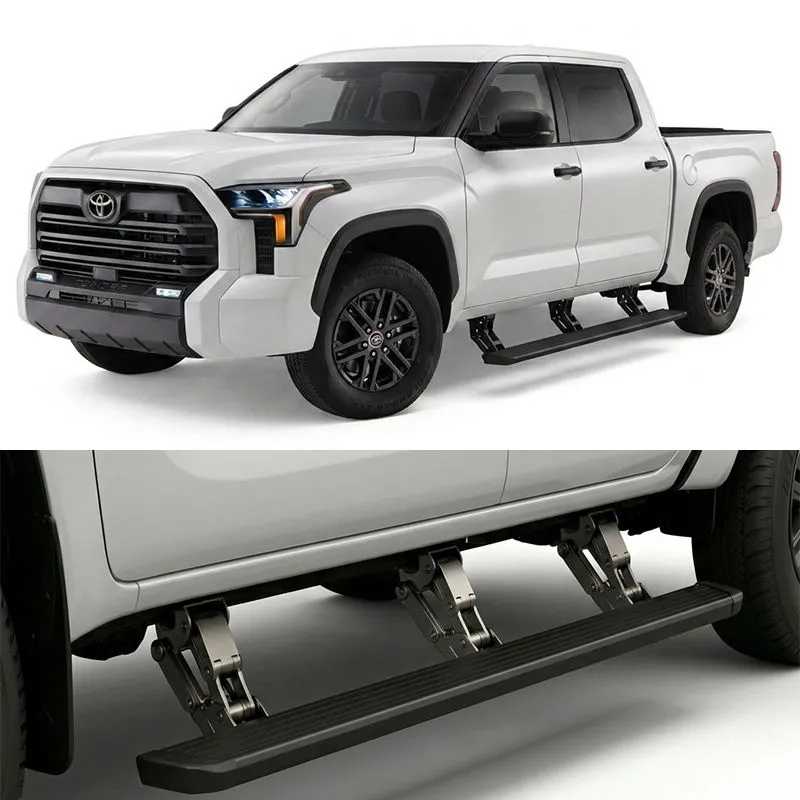
Yes, power running boards are worth it for many truck and SUV owners. They offer the most value on lifted pickups, large SUVs, and vehicles used by children or older passengers. A lower automatic step can make daily entry and exit much easier.
The value is lower for drivers with a limited budget, low-clearance vehicles, or vehicles used almost entirely on paved roads. In these cases, a fixed running board or side step may provide enough function at a lower cost.
So, are power running boards worth the money? If you need easier access and want the step to stay hidden when you drive, the extra cost can make sense. If you do not need those features, a simpler running board may be the better choice.
| Your Situation | Worth It? | Why |
|---|---|---|
| Pickup with a 2″+ suspension lift | نعم | The lower step makes a tall truck easier to enter and exit. |
| Large SUV | نعم | A power step adds easier access without keeping a wide board outside the vehicle. |
| Family with children or older passengers | Usually | A lower step reduces the height they need to climb. |
| Daily driver | Usually | Frequent use makes the convenience more valuable over time. |
| Extreme off-road use | Depends | Ground clearance, trail conditions, and board protection matter. |
| Limited budget | Maybe not | A fixed running board usually costs less. |
| Low-clearance vehicle | Maybe not | The extra step height may provide little practical benefit. |
| Mostly paved-road driving | Depends | The convenience is useful, but a fixed board may be enough for some drivers. |
What Are the Benefits of Power Running Boards?
Power running boards solve two common problems on trucks and SUVs: getting into a tall vehicle and keeping useful space under the vehicle. The board extends when you need a step and retracts when you start driving.
For many owners, the main benefits are simple:
- Easier entry and exit
- Better access for lifted trucks
- More ground clearance than many fixed boards
- A cleaner look when the board is retracted
Easier Entry and Exit
A power running board gives passengers a lower step. This makes it easier to get into and out of a truck or SUV.NHTSA also notes that vehicle modifications and adaptive equipment can improve vehicle entry and exit.
This benefit is especially useful for:
- الأطفال
- Older passengers
- Shorter adults
- Anyone who finds a tall vehicle hard to access
The automatic movement also makes daily use simple. Open the door, and the board extends. Close the door, and the board retracts.
Better for Lifted Trucks
A suspension lift increases the distance between the ground and the cab. This can make a lifted truck harder to enter, especially for passengers.
A power running board can extend below the door sill and create a lower step. The exact step height depends on the vehicle, lift height, mounting brackets, and board design.
For a truck with a 2-inch or larger lift, this lower step can make a noticeable difference in daily use.
Better Ground Clearance
A fixed running board stays outside the vehicle while you drive. Its position can reduce available clearance under the rocker area.
A power running board retracts after the door closes. This keeps the board closer to the vehicle and can reduce its impact on ground clearance.
This feature can be useful for lifted trucks and vehicles that see light off-road use. However, the actual clearance depends on the vehicle and running board design.
Automatic Retraction and Cleaner Appearance
Power running boards extend and retract with the vehicle doors. You get a step when you need it and a cleaner side profile when you do not.
When the boards retract, they sit closer to the vehicle body than a fixed running board. This can give trucks and SUVs a more streamlined appearance.
For owners who want both easy access and a clean exterior, this combination is a major reason to choose power running boards.
What Are the Disadvantages of Power Running Boards?
Power running boards offer more convenience, but they also cost more and have more parts than fixed running boards. Motors, hinges, wiring, and control components can all need attention over time.
For some owners, these trade-offs are worth it. For others, a simple fixed running board may be a better fit.
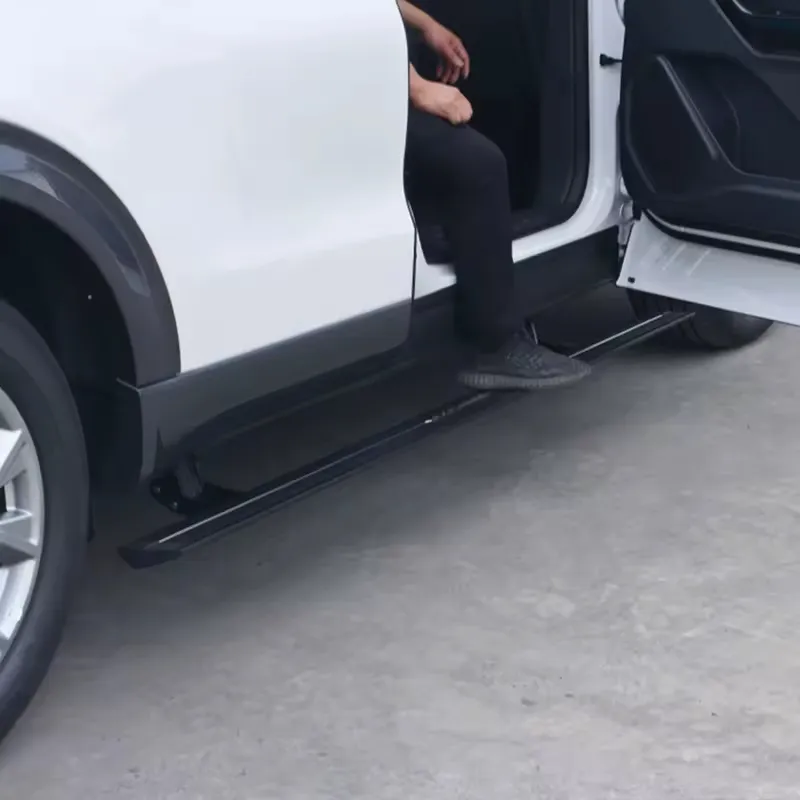
Higher Upfront Cost
Power running boards usually cost more than fixed running boards. The higher price comes from the motors, brackets, wiring, and control system.
If your main goal is to have a basic step, a fixed running board can offer that function for less money.
The extra cost makes more sense when you also want:
- A lower step for a lifted truck
- Automatic operation
- Better clearance when the board retracts
- A cleaner vehicle appearance
More Complex Installation
A fixed running board often uses a simple bolt-on installation. A power running board needs more work because the system must connect to the vehicle’s electrical system.
Installation may include:
- Mounting the boards and brackets
- Routing wiring under the vehicle
- Connecting the control module
- Connecting door or trigger signals
- Checking the automatic deploy and retract functions
The exact installation time depends on the vehicle and product. Some models are easier to install than others.
Potential Reliability Concerns
Power running boards have moving and electrical parts that fixed boards do not have. Motors, hinges, wiring, sensors, and control modules can develop problems over time.
This does not mean a power running board will fail easily. Product quality, installation, vehicle use, and maintenance all affect service life.
Dirt, mud, snow, and road salt can also build up around the moving parts. Ford recommends cleaning and lubricating power running board hinges to help prevent slow movement or deployment problems.
Added Weight and Maintenance
Power running boards usually weigh more than simple fixed steps because they include motors, brackets, and electrical components.
They also need more attention. Owners should keep the hinges and moving parts clean and follow the maintenance instructions for their specific product.
Cold climates need extra care. Ice and snow can block the mechanism and prevent the board from moving normally. Ford warns that heavy ice buildup can stop power running boards from deploying, while trapped mud, snow, ice, and salt can also cause slow movement or unwanted noise.
For a truck that sees harsh winter conditions, regular cleaning and maintenance should be part of ownership.
Are Power Running Boards Worth It for Lifted Trucks and Off-Roading?
Lifted trucks are one of the vehicle types that can get the most practical value from power running boards. As ride height increases, the distance from the ground to the cab also increases, making entry and exit harder for passengers.
But lift height is only one part of the decision. Your driving environment also matters. A truck used mainly on highways and city roads has different needs from one used for rock crawling or technical trails.
Power running boards focus on access and convenience. Rock sliders focus on protecting the rocker panels and lower body from trail impacts. For some builds, the best setup may even combine both.
2″, 4″, and 6″ Lift Comparison
The higher the truck sits, the more useful a lower step can become. However, the value does not increase at exactly the same rate for every truck because tire size, suspension setup, cab height, step drop, and passenger needs also affect access.
| Lift Height | Value of Power Running Boards | السبب الرئيسي |
|---|---|---|
| Stock height | Moderate | Convenience and automatic operation are the main benefits. |
| 2-inch lift | مرتفع | The added ride height makes a lower step more useful for daily access. |
| 4-inch lift | Very high | The larger step-up distance makes a retractable lower step more practical. |
| 6-inch lift | High to very high | A deeper step can make a major difference, especially for passengers. |
At stock height, power running boards are mainly a convenience upgrade. They can make entry easier while keeping the side of the vehicle cleaner when the boards retract.
With a 2-inch lift, the benefit becomes more noticeable. The truck is higher, but it is still close enough to stock height that many owners can use different step solutions. Power running boards become more attractive if the truck is also used as a daily driver.
With a 4-inch lift, access becomes a bigger consideration. A lower power step can reduce the distance passengers need to climb. This can be especially useful for families and anyone who regularly carries passengers.
With a 6-inch lift, step height becomes even more important. A power running board with enough drop can make a tall truck much easier to enter. However, the exact benefit depends on how far the board extends below the rocker area and whether the design works with the truck’s suspension and body configuration.
So, there is no single lift height where power running boards suddenly become necessary. The higher the truck sits, the more important step height becomes. The right product should match the actual height and use of the vehicle.
Power Running Boards vs Rock Sliders
Power running boards and rock sliders may occupy a similar area under the doors, but they serve different purposes.
A power running board is primarily an access product. It gives passengers a step and retracts when the doors close.
A rock slider is primarily a protection product. A properly designed rock slider is built to protect the rocker area when the vehicle contacts rocks, ledges, stumps, or other obstacles on difficult trails.
| مقال مميز | عتبات جانبية كهربائية | Rock Sliders |
|---|---|---|
| Step access | Excellent | Basic to moderate, depending on design |
| Passenger convenience | Excellent | Moderate |
| Automatic deployment | نعم | لا |
| Rock protection | محدود | Excellent |
| الارتفاع عن الأرض | Usually better when retracted | Usually designed for high clearance |
| القيادة اليومية | Excellent | Good |
| Technical off-roading | Depends on design | أكثر ملاءمة |
| Main purpose | Access and convenience | Underbody and rocker protection |
This difference is important for lifted trucks.
If your truck is mainly a daily driver, commuter, or family vehicle that also sees occasional trails, power running boards can offer a strong balance of access and clearance.
If your truck regularly tackles technical trails where the rocker panels may contact rocks, a purpose-built rock slider is usually the more appropriate choice.
Some products combine step functionality with rock protection, and some vehicle builds can accommodate both a power step and additional protection. However, compatibility depends on the vehicle, mounting points, suspension setup, and product design. Always check fitment before combining products.
Ground Clearance: What Actually Matters?
One of the biggest advantages of a retractable power running board is that the board can move closer to the vehicle when it is not being used.
This can reduce the amount of space occupied by the step compared with a fixed running board. It is especially useful on lifted trucks where owners want both easier access and as much usable clearance as possible.
However, it would be inaccurate to say that a power running board has no effect on ground clearance.
Actual clearance depends on several factors:
- Vehicle chassis and rocker-panel height
- Suspension lift height
- Tire size
- Running board design
- حاملات التثبيت
- موقف تم التراجع عنه
- The lowest point of the complete assembly
The board itself may retract, but the brackets and mounting components still occupy space under the vehicle. This means two power running boards can have different clearance even when they are installed on the same truck.
For light off-road use, this difference may be minor. For technical off-roading, a few inches can matter when crossing rocks, ruts, and steep obstacles.
There is also a practical maintenance point for off-road trucks. Mud, dirt, snow, ice, and road salt can enter the moving mechanism. Ford’s owner documentation specifically warns that debris can affect power running board operation and recommends cleaning the hinge areas when problems occur.
The best choice therefore depends on how the truck is used. For a lifted daily driver, power running boards can add significant value. For a dedicated rock-crawling build, protection should come first. If access and protection are both priorities, look for a compatible system that combines the two functions or allows both products to be installed safely.
How Much Do Power Running Boards Cost?
The cost of power running boards includes more than the price of the boards. Buyers should also consider installation, maintenance, and possible repair costs over several years. A fixed running board usually costs less, but it also provides fewer functions. The extra cost of a power system can make sense if you need easier access, automatic operation, and a retractable design.
Purchase Price
Power running board prices vary by vehicle, brand, materials, motor system, and features. Fixed running boards are usually less expensive because they do not use motors, wiring, or electronic controls.
As a general 2026 market guide, typical prices may fall into these ranges:
| Running Board Type | Typical 2026 Price Range |
|---|---|
| Fixed running boards | $200–$500 |
| Entry-level power running boards | $600–$1,000 |
| Mid-range power running boards | $1,000–$1,500 |
| Premium power running boards | $1,500+ |
These are general price ranges, not fixed retail prices. The actual price can change based on the vehicle model, board design, materials, motor system, and included features.
If you only need a basic step, a fixed running board may offer better value. If you want automatic deployment, a lower step for a lifted truck, and a cleaner look when the board retracts, the higher price can be easier to justify.
Installation Cost
Installation adds another cost to the purchase.
Fixed running boards often use a simple bolt-on design. Power running boards require more work because the installer needs to mount the boards, route wiring, connect the control system, and test the automatic functions.
Professional installation can add around $200–$400 in many cases, but local labor rates and vehicle complexity can change the final cost. DIY installation can reduce labor costs, but power boards usually take longer to install than simple fixed steps.
The exact installation time depends on the vehicle and the specific kit. Some vehicles have easier access to wiring and mounting points, while others require more work.
Maintenance and Repairs
Power running boards have more moving and electrical components than fixed boards. This means owners should pay attention to the hinges, mounting hardware, wiring, motors, and control components.
Routine care is usually simple. Keep the moving areas clean and follow the manufacturer’s instructions for lubrication and inspection. Trucks used in snow, mud, or areas with road salt may need more frequent cleaning because debris can affect the moving mechanism.
Repair costs are harder to predict. A problem could involve a motor, sensor, wiring connection, control module, or mechanical component. There is no single repair cost or failure rate that applies to every power running board.
This is why warranty coverage is also important when comparing products. A good warranty can reduce the financial risk of an unexpected component problem.
5-Year Ownership Cost
A five-year comparison should include more than the initial purchase price.
| عامل التكلفة | عتبات جانبية ثابتة | عتبات جانبية كهربائية |
|---|---|---|
| Purchase price | أدنى | أعلى |
| التركيب | عادةً ما يكون أقل | عادةً ما تكون أعلى |
| Routine maintenance | Low | Higher attention may be needed |
| Moving components | Few | More |
| Electrical components | لا | نعم |
| Potential repair cost | أدنى | Potentially higher |
| Automatic operation | لا | نعم |
| Retractable design | لا | نعم |
A simple ownership model is:
5-year cost = purchase price + installation + maintenance + repairs
The final number will vary from one vehicle to another. A power running board may operate for years without a major repair, while another system may require a replacement component earlier. Climate, off-road use, installation quality, product quality, and maintenance can all affect long-term costs.
For this reason, the biggest difference is not always the purchase price. It is whether the added convenience and functionality are useful enough to justify the higher cost.
Are Power Running Boards Worth the Money?
For many owners, power running boards are worth the money when the vehicle is tall and used frequently.
They can provide strong value on lifted pickup trucks, large SUVs, and family vehicles where passengers enter and exit several times a day. The lower step can make a tall vehicle easier to access, while the retractable design keeps the board out of the way when it is not needed.
For a budget-focused buyer or a vehicle that is already easy to enter, a fixed running board may be the better choice. It provides a basic step without the extra motors, wiring, and moving components.
So, are power running boards worth the money? If you will use the automatic step regularly, the higher upfront cost can be worthwhile. If you only need a simple step, a fixed running board may give you more value for your budget.
Are Power Running Boards Reliable?
Power running boards can be reliable for daily use, but they have more moving and electrical parts than fixed running boards. Motor quality, wiring, sensors, installation, weather, and maintenance can all affect long-term performance.
Common Problems
Common problems include motor failure, damaged wiring, sensor issues, and boards that move slowly or stop working.
Mud, snow, ice, and road salt can also build up around the hinges and moving parts. This can restrict movement or cause unusual noise.
Product quality and installation quality also matter. A well-designed system with proper wiring protection and vehicle-specific brackets can reduce common installation-related problems.
Motor, Wiring, and Sensors
The motor drives the board between the deployed and retracted positions. Repeated use, water exposure, dirt, and mechanical resistance can affect motor performance over time.
Wiring is another important area. Since the wiring is installed under the vehicle, it can face water, mud, heat, and road debris. Proper routing and waterproof connections help protect the electrical system.
Sensors and control modules determine when the board should extend or retract. A sensor or connection problem can cause the board to operate incorrectly.
For this reason, buyers should evaluate the complete system instead of looking at motor specifications alone. Warranty coverage and replacement parts are also worth checking before purchase.
Snow, Ice, Water, and Salt
Winter weather can create extra challenges for power running boards. Snow and ice can collect around the hinges and prevent normal movement. Road salt can also accelerate corrosion if it remains on exposed components for long periods.
An appropriate IP rating can provide useful information about water protection. For example, an IPX67-rated component has defined protection against water under specific test conditions. However, the rating does not automatically mean the entire running board system is waterproof in every situation.
If you drive in snow, mud, or salty conditions, clean the moving areas regularly. Remove heavy ice and snow before operating the board rather than forcing a frozen mechanism to move.
Maintenance Tips
Basic maintenance can help keep power running boards working properly:
- Keep hinges and moving parts clean.
- Check wiring and mounting hardware for visible damage.
- Clean the mechanism after heavy snow, mud, or salt exposure.
- Test the deploy and retract functions before winter.
- Follow the manufacturer’s instructions for lubrication and inspection.
- Use only lubricants recommended for the specific product.
There is no universal maintenance schedule for every power running board. The required care depends on the design, materials, climate, and manufacturer instructions.
Overall, power running boards can provide reliable service when you choose a quality system, install it correctly, and maintain it properly. They require more care than fixed running boards, but the added convenience can make that trade-off worthwhile.
Are Power Running Boards Easy to Install?
Power running boards are generally manageable to install, but they are more involved than fixed running boards. You need to mount the boards, install the brackets, connect the wiring, and test the automatic deploy and retract functions.
The good news is that many vehicle-specific kits are designed to use existing mounting points, which can make installation much easier.
What Do You Need for Installation?
For a typical DIY installation, you may need:
- Socket and wrench set
- Screwdrivers
- Wire stripper and crimping tools
- Multimeter
- Basic trim removal tools
- Drill only if the specific kit requires it
Vehicle-specific brackets and a dedicated wiring harness can simplify the process. The exact tools and wiring method depend on the vehicle and running board kit.
Always check the installation instructions for your exact vehicle year before starting.
How Long Does Installation Take?
A complete installation can take around 4–6 hours for an experienced DIY installer. This usually includes mounting the boards, installing the wiring, connecting the control system, and testing the boards.
Some vehicles can take less time, while more complex applications may take longer. Installer experience also makes a difference.
After installation, test every door and make sure both boards extend and retract correctly.
Do You Have to Drill Holes?
Usually, no.
Many vehicle-specific power running boards use existing factory mounting points, so you do not need to drill new holes for the main brackets.
However, drilling may still be required on some older vehicles, custom installations, or kits that do not use factory mounting points. Wiring access can also vary between vehicles.
Check the installation manual before assuming a kit is completely drill-free.
DIY vs. Professional Installation
DIY installation can save labor costs if you have basic mechanical and electrical skills. It is a practical option when the kit includes vehicle-specific brackets and clear wiring instructions.
Professional installation makes more sense if you are not comfortable working with vehicle wiring or if the installation is more complex. Professional labor may add roughly $200–$400, depending on the vehicle and local labor rates.
| التركيب | الأفضل لـ | Main Advantage |
|---|---|---|
| DIY | Experienced vehicle owners | Saves labor costs |
| Professional | Complex installations | Less installation work for the owner |
Overall, power running boards are not extremely difficult to install, but they require more work than fixed running boards. A vehicle-specific kit can make the process much easier and may eliminate the need for drilling.
العتبات القابلة للطي مقابل العتبات الثابتة
The main difference between power running boards and fixed running boards is how they balance accessibility, clearance, cost, and simplicity.
Power running boards extend when the door opens and retract when the door closes. Fixed running boards stay in place all the time.
| مقال مميز | عتبات جانبية كهربائية | عتبات جانبية ثابتة |
|---|---|---|
| Step operation | Automatic deploy/retract | ممتد دائمًا |
| Entry and exit | Easier on tall vehicles | Provides a basic step |
| الارتفاع عن الأرض | Retracts closer to the vehicle | Board stays outside the vehicle |
| التركيب | More involved | Usually simpler |
| Price | أعلى | أدنى |
| Maintenance | More components to maintain | Minimal |
| الأفضل لـ | Tall trucks, SUVs, daily drivers | Budget-focused buyers and simple setups |
Actual ground clearance depends on the vehicle, suspension height, tire size, mounting brackets, and running board design. A retractable board can reduce its impact on clearance, but it does not mean the board has no effect on the lowest point of the vehicle.
Which Vehicles Benefit Most?
The right choice also depends on the vehicle and how it is used.
| Vehicle | Verdict | Why |
|---|---|---|
| فورد F-150 | نعم | A power step can make entry easier, especially on lifted trucks. |
| Chevy Silverado | نعم | The lower step can improve access to the full-size truck. |
| RAM 1500 | نعم | Useful for daily access while keeping the side profile cleaner when retracted. |
| GMC Sierra | نعم | The taller truck benefits from a lower automatic step. |
| Toyota Land Cruiser | نعم | Useful for easier access to a large SUV without keeping a wide step outside. |
| Nissan Patrol | نعم | Particularly useful when the vehicle has a lift or higher ride height. |
| Jeep Wrangler / Gladiator | Conditional | Useful for access, but off-road users should also consider ground clearance and rocker protection. |
For stock-height vehicles, fixed running boards may provide enough functionality. As vehicle height increases, the lower step from a power running board becomes more valuable.
For lifted trucks and SUVs used mainly on the road, power running boards can offer a good balance between access and clearance. For vehicles used for technical off-roading, rock sliders or other underbody protection may be more important than a powered step.
The best choice comes down to what you need most: lower entry height and automatic operation, or lower cost and simpler construction.
الخلاصة
Are power running boards worth it? For many truck and SUV owners, yes. They are especially useful for lifted pickups, large SUVs, daily drivers, and vehicles that regularly carry children or older passengers. The lower automatic step makes entry and exit easier, while the retractable design keeps the boards closer to the vehicle when they are not needed. They may be less worthwhile if you have a limited budget, drive a low vehicle that is already easy to access, use your vehicle mainly for simple paved-road driving, or need maximum rocker protection for technical off-roading. In these cases, fixed running boards or rock sliders may be a better fit. If you decide that power running boards are right for your vehicle, product quality and after-sales support also matter.
عتبات جانبية MAX Power use vehicle-specific mounting brackets and MAX motors with IPX67-rated water protection. MAX systems have been tested for 80,000 operating cycles and a 500-hour salt spray test, support loads of 300kg+, and come with a 2-year warranty. MAX also supports OEM and ODM projects with an MOQ starting from 1 set. Overall, power running boards are worth the money when you will use the automatic step regularly and value easier access, a cleaner appearance, and a retractable design. Before buying, check your vehicle compatibility, lift height, ground clearance, installation requirements, warranty, and maintenance needs, then use the MAX Power Running Boards Selector to find the right setup for your truck or SUV.
Ready to upgrade your truck or SUV with power running boards? Contact MAX today for product recommendations, vehicle compatibility, OEM/ODM projects, and wholesale inquiries.
Related Articles
Still comparing your options before choosing power running boards? These guides cover installation, product selection, side-step differences, and common issues to help you make a more informed decision.
