
Power Running Board Materials affect more than the look of a running board. They can affect weight, corrosion resistance, step stability, retractable-system load, maintenance needs, and long-term daily performance. Aluminum alloy, stainless steel, and iron each have different strengths and limitations. The best choice depends on the product structure, vehicle, climate, and expected use.
Power running board materials should be evaluated as part of a complete system. The visible step board is only one part of the product. Brackets, shafts, moving parts, drainage paths, surface coatings, and weather protection also affect how a retractable running board works over time. A strong step surface cannot make up for weak supports or poor corrosion protection.
This article compares aluminum alloy, stainless steel, and iron for power running boards. It explains how each material affects weight, strength, corrosion resistance, maintenance, and daily use. Before comparing these materials in detail, it helps to understand which parts make up a typical power running board.
What Materials Are Used in Power Running Boards?
A power running board is a complete mechanical and electrical system. The visible step is only one part of the product. A typical system also includes structural supports, brackets, a drive system, wiring, connectors, and a controller. Each part has a different job, so each part can require different materials and protection.
Step Board or Platform
The step board or platform is the part passengers use directly. Its material affects surface grip, corrosion resistance, drainage, and the amount of weight the retractable system must move during each cycle.
The platform also affects step width and stability. A wider platform can give passengers more room to place their feet. A suitable surface design can help maintain grip in wet conditions. Drainage features can help water leave the step instead of collecting on the surface.
The visible platform may use aluminum alloy, stainless steel, or iron depending on product design. However, the material choice should also match the shape, thickness, surface design, and overall weight of the board.
Structural Supports and Brackets
Structural supports and brackets connect the running board to the vehicle. They transfer load between the step and the vehicle body. These parts can experience passenger load, vehicle vibration, road impacts, and repeated deployment cycles.
Their material, geometry, surface protection, and vehicle-specific fitment all contribute to long-term stability. A strong platform still needs suitable supports and brackets to carry its load. The mounting points also need to match the vehicle so the system can maintain stable movement during daily use.
Motor and Drive System
The motor and drive system allows the board to deploy and retract automatically. This system can include an electric motor, drive mechanism, wiring, connectors, and controller.
The material of the visible step board does not represent the durability of the complete system. Moving parts, wiring, connectors, and weather protection also affect how the retractable running board operates over time. Each component needs suitable protection for its location and function.
Why the Material Label Is Not the Whole Story
A material label can describe only part of a running board. For example, “aluminum” may refer to the main step platform. “Stainless steel” may describe exposed tubes, trim parts, or selected components. “Iron” may describe certain structural or support parts.
For this reason, buyers should look at the complete construction instead of judging a running board by one material name. The platform, supports, brackets, and drive system all work together.
A material label is only the starting point. Now let’s look at the three main material categories in detail.
Aluminum Alloy Power Running Boards: Pros and Cons
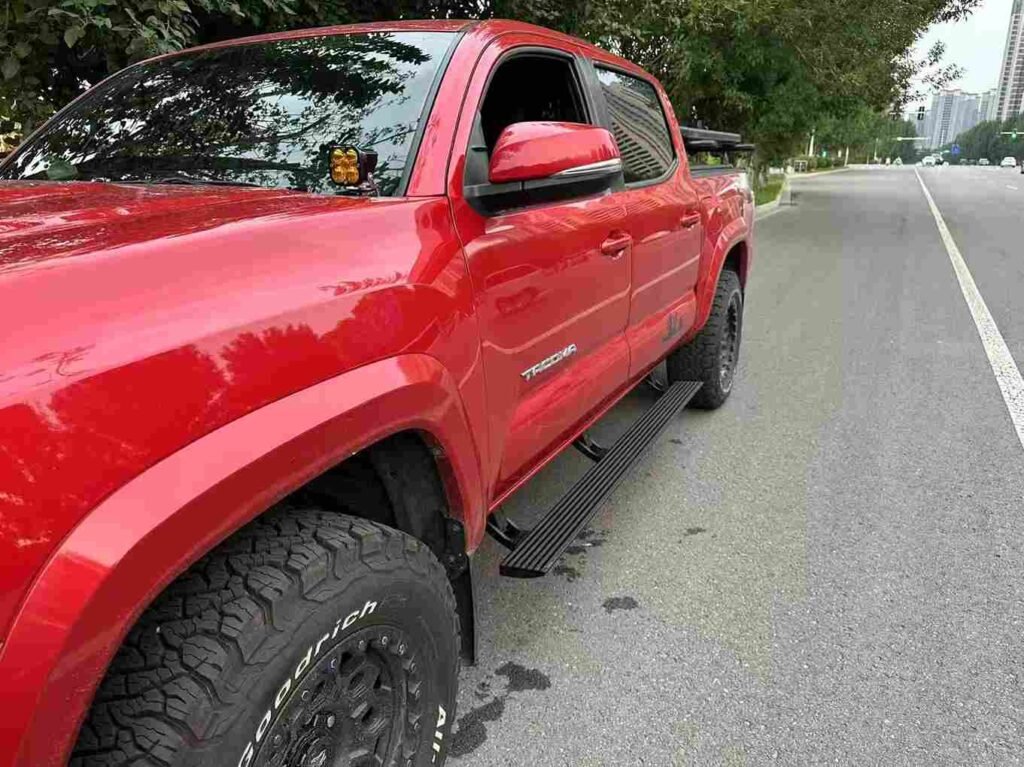
Aluminum alloy is commonly used for retractable power running boards because it balances lower weight, corrosion resistance, and design flexibility. It can support a wide and stable stepping platform without adding unnecessary mass to the moving system. These properties make aluminum alloy a common choice for electric running board materials dan retractable running board materials.
Pros of Aluminum Alloy
Lower Weight
Aluminum alloy is usually lighter than stainless steel and iron. A lighter step board can help reduce unnecessary load on the retractable system during each deployment and retraction cycle.
Lower weight also gives engineers more flexibility when they design the moving structure. The final system weight still depends on the platform, brackets, drive components, and other parts.
No Typical Red Rust
Aluminum does not form the typical red rust associated with iron. Its surface forms a thin oxide layer when exposed to air. This property can help aluminum platforms handle moisture, rain, road dirt, and normal salt exposure.
However, aluminum is not rust-proof or maintenance-free. Surface oxidation, discoloration, and salt-related changes can still occur. The surface finish and product design also affect long-term appearance.
Design Flexibility
Aluminum alloy works well with extrusion processes. Manufacturers can form an aluminum profile with different shapes and sections.
An extruded profile can include reinforcement channels, drainage features, and traction patterns within the platform design. This approach can create a wide stepping surface while controlling the overall weight.
Suitable for Moving Systems
A retractable running board needs to move each time the system deploys or retracts. Lower platform weight can help reduce unnecessary moving load.
The combination of lower weight and extrusion design flexibility makes aluminum alloy suitable for automatic deployment systems. The complete design still needs to balance weight, rigidity, mounting strength, and movement.
Cons of Aluminum Alloy
Aluminum alloy also has limitations. It can develop oxidation or surface discoloration. Direct contact with some other metals can also create a risk of dissimilar-metal corrosion if the connection lacks suitable protection.
Aluminum can also dent or deform under severe impact. This does not mean every aluminum running board has low strength. Actual load capacity and rigidity depend on several factors, including:
- Alloy grade
- Wall thickness
- Extruded profile
- Reinforcement
- Mounting design
- Pemasangan yang disesuaikan dengan jenis kendaraan
- Complete system engineering
A power running board also has a different job from a rock slider. A running board needs to support normal passenger loads and repeated deployment cycles. A rock slider needs to handle direct contact with rocks and other severe impacts. Buyers should not judge an aluminum running board by comparing it with a component built for a different purpose.
Aluminum Grades and Extruded Design
The aluminum alloy grade affects forming, mechanical properties, and surface performance. The temper also matters. T6 refers to a heat-treated condition that includes solution heat treatment and artificial aging.
Extrusion allows manufacturers to create a profile with a controlled cross-section. The profile can include reinforcement sections, drainage paths, and features for the stepping surface. This design can improve the balance between weight and rigidity.
MAX uses 6063-T6 aluminum alloy for its main step board construction. This heat-treated, extrusion-friendly material supports a lightweight yet rigid profile designed for stable daily stepping and efficient power deployment.
However, 6063-T6 does not determine strength or durability by itself. Profile design, reinforcement, mounting systems, vehicle-specific fitment, surface protection, and overall system engineering also affect the final performance of a power running board.
Stainless Steel Power Running Boards: Pros and Cons
Stainless steel is another common material for running board components. It can provide good corrosion resistance, a strong metal appearance, and useful structural properties when the grade, surface finish, drainage, and maintenance match the exposure conditions. However, stainless steel is not automatically suitable for every retractable running board. Its weight, grade, surface condition, and environment all affect its performance.
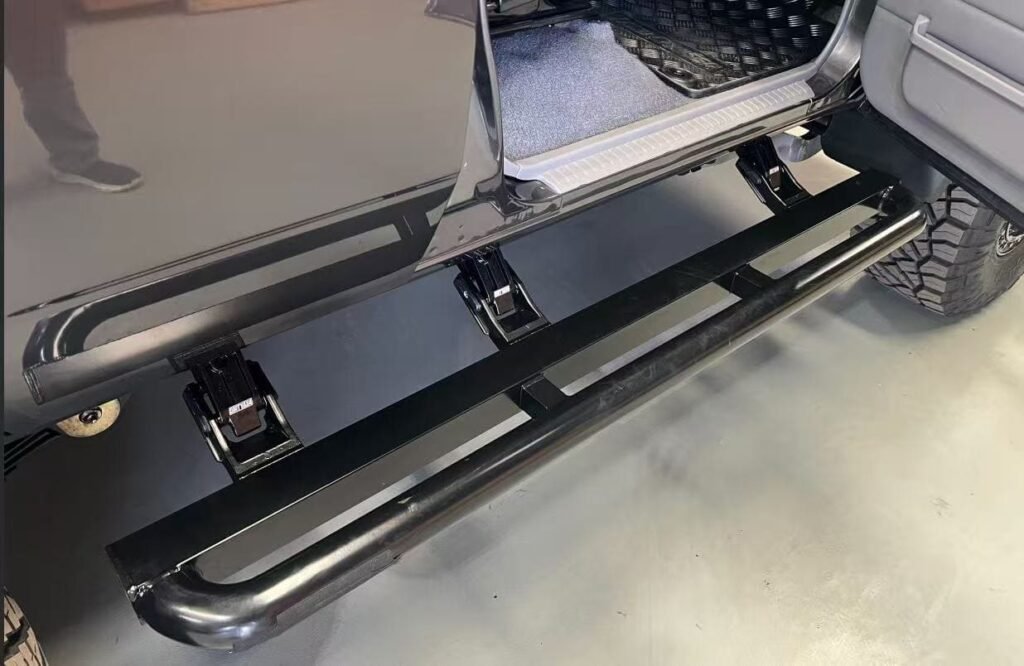
Pros of Stainless Steel
Stainless steel offers several useful properties for running board construction:
- Good Corrosion Resistance
A suitable stainless steel grade can resist corrosion well in many outdoor environments. Its performance depends on the specific grade, surface finish, product design, and exposure conditions. - Strong Metal Structure
Stainless steel can provide good strength and rigidity in suitable designs. This property makes it useful for fixed running boards, tubular side steps, brackets, and selected structural components. - Durable Metal Appearance
Stainless steel can maintain a clean metal appearance when the surface finish and maintenance match the environment. Proper cleaning can also help reduce surface deposits and staining. - Wide Range of Applications
Manufacturers commonly use stainless steel for fixed running boards, tubular side steps, decorative exterior parts, and selected visible components. Its properties allow manufacturers to use it in different product designs.
Penting: Corrosion resistance depends on the specific stainless grade, surface finish, design, and exposure conditions.
Cons of Stainless Steel
Stainless steel also has several limitations that buyers should consider:
- Higher Weight
Stainless steel is generally heavier than aluminum alloy. This difference can matter more in a retractable running board because the system must move the board during each deployment and retraction cycle. A heavier platform can increase the load on the moving system. - Higher Material Cost
Stainless steel can cost more than some other materials. The final cost depends on the grade, thickness, surface finish, fabrication process, and product design. - Different Grades Have Different Corrosion Resistance
Stainless steel is a material group rather than one single grade. Different grades have different resistance to chloride exposure. A grade that performs well in normal outdoor conditions may show more surface staining or localized corrosion in a high-salt environment. - Possible Surface and Localized Corrosion
Stainless steel can develop staining, tea staining, pitting corrosion, or crevice corrosion under certain conditions. Terms such as “rust-proof,” “never rusts,” and “maintenance-free” do not accurately describe stainless steel running boards.
Why Stainless Steel Can Corrode in Salt-Air Environments
Stainless steel is corrosion-resistant, not corrosion-proof.
Salt-laden air can leave chloride deposits on a stainless steel surface. When these deposits retain moisture, they can form a salt-containing electrolyte film on the metal. This chloride-rich moisture film can increase the risk of surface staining and localized corrosion.
Tea staining is one common result. It appears as brown or discolored marks on the stainless steel surface. It often starts as a surface appearance problem. However, long-term salt deposits, continuous moisture, poor drainage, tight gaps, or an unsuitable stainless grade can increase the risk of localized corrosion.
Coastal environments can create higher salt exposure because sea spray and salt particles can settle on exposed metal surfaces. The closer a product is to a surf coastline, the greater the potential for salt exposure. However, there is no single distance from the coast that guarantees a specific corrosion result. Wind, humidity, rainfall, product location, surface condition, and cleaning frequency can all change the actual exposure.
For stainless steel power running boards, material grade and surface finish should therefore be considered together with product design and maintenance. Good stainless steel selection can reduce corrosion risk, but it does not remove the need for suitable drainage, cleaning, and surface care.
Corrosion resistance depends on the specific stainless grade, surface finish, design, and exposure conditions. For more technical information, see Outokumpu’s guide to stainless steel and atmospheric corrosion.
Iron Power Running Boards: Pros and Cons
Iron can provide useful structural strength for running board components. It can handle passenger loads and certain impacts when the component has a suitable design. However, iron is generally heavier than aluminum alloy, and it has a higher risk of red rust when its protective surface is damaged or when moisture and salt remain on the metal.
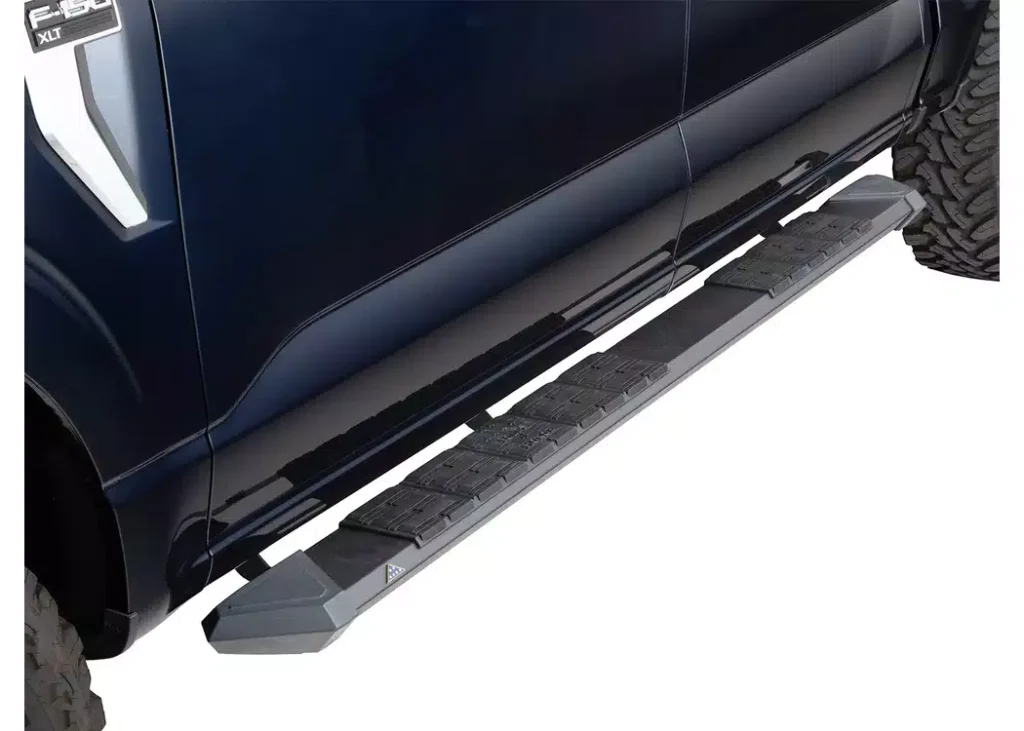
Pros of Iron
Iron can offer several useful properties for running board construction:
- Structural Strength
Iron can provide good structural strength in suitable designs. It can support loads and handle certain impacts without requiring the same material approach as lighter aluminum components. - Load and Impact Resistance
Suitable iron components can handle passenger loads, vibration, and certain impact conditions. Actual performance depends on the component design, material condition, mounting structure, and vehicle application. - Useful for Fixed Structures
Iron may be used in fixed running boards, heavy-duty structures, and certain support components. Its structural properties can also suit product designs where weight is less important. - Cost Considerations
Iron can be considered for cost-sensitive product designs when its weight and corrosion protection requirements fit the application.
Cons of Iron
Iron also has limitations that can affect running board design:
- Higher Weight
Iron is generally heavier than aluminum alloy. In a retractable running board, this higher weight can increase the dynamic load that the moving system needs to handle during repeated deployment and retraction. - Red Rust Risk
Iron can develop typical red rust when moisture reaches the exposed metal. Corrosion can become more serious when the protective surface is damaged or when water and contaminants remain on the component. - Greater Exposure Risk in Harsh Conditions
Rock chips, scratches, standing water, road salt, coastal salt air, and mud buildup can increase corrosion risk. These conditions can damage or weaken surface protection over time. - Higher Dependence on Protection and Maintenance
Iron components rely more heavily on effective surface protection, suitable drainage, and regular inspection. Damage to the protective surface should be addressed before corrosion spreads.
Why Iron Needs Protective Coating and Maintenance
Iron components require effective surface protection and regular cleaning to reduce corrosion risk, especially when exposed to moisture, salt, mud, and road debris.
A running board can collect contaminants around edges, holes, mounting points, and other areas where water may remain. Welded areas can also require close inspection because surface damage or poor drainage can create places where moisture stays for longer periods.
Regular inspection can help identify problems at an early stage. Buyers and installers should check:
- Surface protection
- Edges
- Holes
- Welds
- Drainage paths
- Scratches and other surface damage
- Early rust spots
A damaged protective surface does not always mean the complete component has failed. Early cleaning and suitable repair can help limit further corrosion. The exact repair method should match the product’s surface protection and manufacturer instructions.
Aluminum Alloy vs. Stainless Steel vs. Iron
Aluminum alloy, stainless steel, and iron can all serve different roles in running board construction. Their performance depends on weight, strength, corrosion exposure, product design, and system requirements. The table below provides a general comparison of these three Running Board Materials.
Material Comparison Table
| Faktor | Paduan Aluminium | Stainless Steel | Iron |
|---|---|---|---|
| Berat | Lebih rendah | Lebih tinggi | Lebih tinggi |
| Corrosion Resistance | Bagus | Good to High* | Lebih rendah |
| Typical Red Rust | No typical red rust | No typical red rust* | Higher risk |
| Strength | Bagus | Tinggi | Tinggi |
| Design Flexibility | Tinggi | Medium | Medium |
| Maintenance Needs | Sedang | Moderate* | Lebih tinggi |
| Retractable System Fit | Well suited | Depends on system weight | Less suited when weight is high |
| Aplikasi Umum | Retractable power running boards | Fixed/tubular running boards and selected exterior components | Heavy-duty fixed boards or protected structural applications |
* Stainless steel performance depends on the specific grade, surface finish, chloride exposure, drainage design, and cleaning frequency.
The table shows general material characteristics rather than fixed performance rankings. Stainless steel can provide excellent corrosion resistance when the grade, surface finish, drainage, and exposure conditions are suitable. The material name alone does not determine its corrosion performance.
Iron can also provide high structural strength. However, exposed iron components have a higher risk of red rust when protective surfaces are damaged or when moisture, salt, and mud remain on the surface. This makes surface protection, drainage, and maintenance important parts of an iron running board design.
Aluminum alloy offers a practical balance of lower weight, corrosion resistance, and design flexibility. Its main advantage is not that it is always stronger than other materials. Its lower weight can be useful for an automatic retractable system because the system needs to move the step during every deployment and retraction cycle.
Which Material Works Best for Retractable Power Running Boards?
For retractable power running boards, aluminum alloy often provides a practical balance of low weight, corrosion resistance, and design flexibility. Its lighter weight can help support efficient deployment and retraction, while extruded profiles can provide a wide and stable stepping surface.
This does not mean every aluminum alloy running board will outperform every stainless steel or iron design. Profile engineering, reinforcement, mounting, drainage, motor protection, vehicle-specific fitment, and maintenance all affect real-world results.
The right material choice can also change depending on where and how the vehicle is used.For examples of electric running boards using different vehicle-specific designs, explore MAX power running boards.
How Environment Affects Power Running Board Materials
The environment can change how running board materials perform. Moisture, salt, dust, and temperature can affect exposed surfaces and moving parts. Buyers should consider climate and road conditions along with the material itself.
Coastal and Salt-Air Areas
Coastal areas expose running boards to sea air, sea fog, and salt spray. These conditions can leave chloride deposits on exposed surfaces.
Salt can collect under the step board, around brackets, at joints, and along edges. It can also reach moving components, wiring, and connector areas.
Aluminum alloy is often a balanced choice for retractable running boards in coastal areas. It combines lower weight with good corrosion resistance. Stainless steel can also perform well, but its result depends on the grade, surface finish, drainage, and exposure level.
Iron needs stronger attention to surface protection. Damaged protection can expose the metal to moisture and salt.
Regular fresh-water rinsing can remove salt deposits. Good drainage can also reduce standing moisture.
Winter Road-Salt Areas
Winter roads can expose running boards to de-icing salt, brine, slush, and wet snow. Freeze-thaw cycles can also leave water in gaps and low areas.
Salt water can reach the underside of the step board, brackets, joints, and moving components. Motor areas, wiring, and connectors also need suitable weather protection.
Aluminum alloy can perform well in these conditions, but regular rinsing still matters. Stainless steel also needs cleaning when chloride deposits build up. Iron needs effective surface protection because damaged areas can develop red rust.
Ice creates another concern. Water that remains around moving parts can freeze and affect board movement. Keeping drainage paths clear can help reduce this risk.
Road-salt exposure is common in parts of the United States, Canada, Northern Europe, and northern Japan.
Rainy and Humid Climates
Rain and high humidity do not always create high chloride exposure. However, frequent moisture can keep water and dirt on the running board for longer periods.
Drainage becomes important in these conditions. Water should leave the step surface, brackets, joints, and moving areas easily.
A suitable traction surface can also help provide stable footing when the step is wet. Weather-protected moving components can help the retractable system operate through repeated wet conditions.
Aluminum alloy is often a balanced choice for humid environments. Stainless steel can also perform well when the grade and surface finish match the conditions. Iron needs effective surface protection and closer inspection of damaged areas.
Regular cleaning helps remove dirt and other deposits before they remain on the product for long periods.
Saline Dust and Inland Areas
Salt exposure can also occur far from the coast. Salt lakes, salt flats, saline soil, mineral-rich desert dust, and winter road salt can leave salt deposits on vehicles.
Dry salt and mineral dust can collect on the step, brackets, joints, and underside of the board. When moisture reaches these deposits, they can form a corrosive moisture film.
A running board used in these areas should have easy-to-clean surfaces and suitable drainage. Regular cleaning can remove accumulated salt and dust.
Motor areas, wiring, connectors, and moving components also need suitable protection. Inland location does not always mean low salt exposure. Local soil, dust, road conditions, and weather can all affect how electric running board materials perform over time.
How to Choose the Right Material for Power Running Boards
The right material depends on how and where you use the vehicle. Climate, road conditions, system weight, and component protection all affect material selection. Buyers should look at the complete running board instead of choosing a material from its name alone.
Consider Your Driving Environment
Start with your driving environment. Ask a few simple questions:
- Do I drive near the coast or salt air?
- Are roads treated with salt or brine in winter?
- Do I drive near beaches, salt lakes, or muddy roads?
- Is my vehicle parked outdoors in rain or high humidity?
High salt and moisture exposure can increase corrosion risk. In these conditions, aluminum alloy is often a balanced choice for the main step board. Buyers should also check drainage and motor protection because the material alone does not control the full system’s performance.
Check Which Components Use Each Material
Do not judge a running board only by the material shown in the product name. Different components can use different materials and protection methods.
Ask which parts actually use each material. A running board described as “aluminum” may use aluminum mainly for the visible platform, while other components can have different corrosion-protection needs.
Check the material and protection used for:
- Step board
- Structural supports
- Tanda kurung
- Komponen yang bergerak
- Fasteners
- Motor housing
- Wiring protection
This approach gives a clearer view of the complete construction. It also helps buyers identify areas that may need more attention in wet or salt-exposed environments.
Consider Weight and Retractable System Load
A retractable running board must move the step every time the vehicle doors open or close. The motor and linkage system must handle this repeated movement.
A heavier component does not automatically provide better performance. Higher weight can add unnecessary dynamic load to the moving system. A suitable lower-weight design can help the system move the board efficiently while maintaining a stable stepping surface.
The complete system still matters. Profile design, reinforcement, brackets, drive components, and mounting structure all affect the final result.
Check Corrosion Protection and Drainage
Material selection should also include the way the product manages water, salt, mud, and debris.
Check for:
- Clear water drainage paths
- Mud escape paths
- Protected joints
- Suitable surface finish
- Protected electrical connections
- Easy-clean access
- Isolation between dissimilar metals
These details can reduce the amount of moisture and debris that remains around the running board. They also help protect structural and moving components from long-term exposure.
In salt-exposed environments, the best running board is not only corrosion-resistant. It is designed to prevent salt, water, mud, and debris from staying trapped around structural and moving components.
If you are comparing other factors such as vehicle fitment, step width, installation, and load capacity, see our complete guide on How to Choose Running Boards.
Maintaining Power Running Boards in Harsh Environments
Harsh environments can increase the amount of salt, mud, sand, and water that reaches a power running board. Regular cleaning can help remove these deposits before they stay around moving and structural components. The maintenance approach should match the driving environment and the manufacturer’s instructions.
Coastal and Salt-Air Maintenance
Vehicles used near the coast can collect salt from sea air, sea fog, spray, beaches, and boat ramps. After heavy salt exposure, rinse the running board with fresh water to remove salt deposits, sand, and other debris.
Pay attention to areas that can collect contaminants:
- Under the board
- Linkage joints
- Support areas
- Motor housing exterior
- Wiring and connector exteriors
- Drainage channels
Do not use a high-pressure water jet at close range on motor seals, connectors, or controller housings. High-pressure water can force water into areas that need protection.
After cleaning, check for salt crystals, mud, blocked drainage channels, surface staining, unusual noise, or changes in smooth operation. If the board moves differently after exposure to salt or sand, inspect the affected areas before continued use.
Winter Road-Salt Maintenance
Winter roads can leave salt, brine, wet snow, and slush on the underside of a running board. Clean the board with fresh water after significant exposure to road salt. This helps remove salt buildup before it remains on the product for long periods.
During inspection, check for:
- Salt buildup around joints and supports
- Ice around moving joints
- Uneven deployment or retraction
- Slower movement than usual
- Unusual motor sounds
Ice and packed slush can also interfere with board movement. Remove visible ice and debris without forcing the board to move against an obstruction.
Use only cleaning and maintenance products recommended by the manufacturer. Do not use strong acids, strong alkalis, or chlorine-containing cleaners unless their compatibility with the product materials and finishes has been confirmed.
When to Inspect the Running Board
A power running board should be inspected when its movement or condition changes. Pay attention to these signs:
- The board deploys or retracts more slowly than usual.
- One side moves differently from the other.
- Repeated clicking, grinding, rubbing, or motor-spinning noises occur.
- The board does not fully retract.
- Drainage channels are blocked.
- Wiring appears worn or connectors look loose.
- Salt crust, staining, coating damage, or corrosion appears around joints or supports.
These signs do not always identify one specific failed component. They indicate that the running board needs closer inspection. If the cause is unclear, follow the manufacturer’s inspection or service instructions rather than forcing the mechanism to operate.
Kesimpulan
Aluminum alloy offers a good balance of low weight, corrosion resistance, and design flexibility. Stainless steel can provide good corrosion resistance with the right grade, design, and maintenance. Iron provides structural strength but needs more attention to surface protection, drainage, and corrosion control.
Material is only one part of a power running board. Step board construction, structural supports, motor protection, drainage, and vehicle-specific design all affect long-term performance.
MAX applies the material and system principles discussed in this guide to its electric running board designs. For a vehicle-specific solution, contact MAX.
