
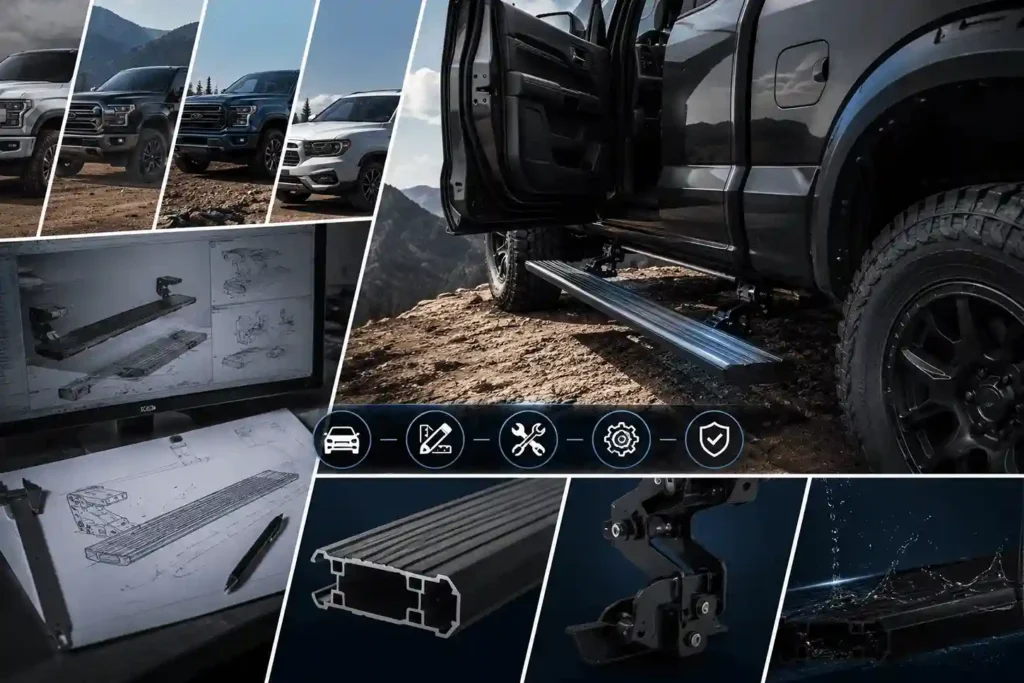
Customize Power Running Boards can solve fitment problems for 4x4s that lack a suitable vehicle-specific solution. Popular SUVs and trucks often have ready-made options, but older 4x4s, discontinued vehicles, less common models, region-specific 4x4s, and heavily modified vehicles may need a different approach.
A custom power running board is more than a longer or shorter step. Engineers need to check the chassis, mounting points, available space, and board movement. These details help the running board fit the vehicle and operate correctly.
For 4×4 shops that serve a specific vehicle platform, this need can appear again and again. This guide explains why some vehicles need custom power running boards, what chassis data engineers need, how STL chassis data is obtained, and how a real LC80 project can move from vehicle data to a finished solution.
Why Do Different Vehicles Need Custom Power Running Boards?
A power running board is a complete mechanical and electrical system. Vehicle compatibility depends on more than board length. Different vehicles can have different chassis widths, mounting points, ground clearance, and available space. These differences can make a standard power running board unsuitable.
A Power Running Board Is More Than Just Its Length
Some people think customizing a running board simply means changing its length. In practice, a complete system has many parts:
- Running board
- Mounting brackets
- Motor
- Linkage
- Pivot points
- Wiring
- Sensors
- LED lights
- End caps
Each part needs to work with the vehicle. Two trucks may have a similar body length but very different chassis structures. The available space under the doors can also vary.
For this reason, custom fitment is about the complete system, not just the board itself.
The Mounting Points May Be Different
The next issue is the vehicle chassis. Different vehicles can have different mounting points, mounting holes, chassis widths, chassis heights, and frame structures.
If the mounting points do not match, several problems can occur:
- The brackets may not install correctly.
- The mounting holes may not line up.
- The board may sit too high or too low.
- The vehicle may not have enough installation space.
- The brackets or board may interfere with other chassis components.
This is why the first question in power running board customization is not “How long should the board be?”
The better question is:
“Where can the running board actually be mounted?”
Cutting the Board Does Not Fix the Brackets
Cutting the board can change its length, but it cannot change the vehicle’s mounting structure.
A simple modification may look like this:
Standard board → Cut shorter or longer
A real custom development process needs more steps:
Vehicle data → Bracket design → Board position → Motor and linkage design → Fitment testing
This difference matters for custom power running boards for truck and 4×4 applications. The board must match the vehicle’s structure, not just its side length.
A shop cannot solve every fitment problem by cutting a standard board. The brackets, mounting points, and moving parts still need to match the vehicle.
The Motor and Linkage Also Need to Match
A bracket may fit the chassis, but that does not mean the power running board is ready for use. The motor and linkage control how the board moves.
Engineers need to check:
- Opening angle
- Closing angle
- Pivot movement
- Deployed position
- Retracted position
- Ground clearance
Incorrect geometry can cause abnormal movement, incomplete deployment, interference, or excessive mechanical stress. These problems can also affect long-term durability.
A proper vehicle-specific development must therefore consider four areas:
Mounting + Geometry + Movement + Clearance
This approach helps custom power running boards work as a complete system instead of treating the running board as a separate part.
Why Is There Demand for Vehicle-Specific Power Running Boards?
The demand for custom power running boards often comes from specialized 4×4 markets. Vehicle popularity can vary by country and by local modification market. A model may have modest global sales but strong demand among 4×4 owners in a specific region.
4×4 Modification Shops Often Specialize in Specific Vehicles
Many 4×4 modification shops focus on specific vehicle platforms. Some shops work mainly with Land Cruiser, Patrol, Hilux, Ranger, Jeep, or classic 4×4 models.
These shops build a customer base around the vehicles they know well. If a shop receives several modification projects for the same vehicle each month, the demand for a vehicle-specific running board becomes a real business need.
A shop can have strong demand for a vehicle-specific product even when that vehicle is not a high-volume model globally.
For example, a shop may regularly modify a certain Land Cruiser model. Customers may ask for electric running boards as part of their projects. If no standard product fits the vehicle, the shop still has a clear reason to find a custom solution.
Standard Products Do Not Cover Every 4×4
Manufacturers usually develop standard power running boards for high-volume vehicles and current-generation SUVs and pickups. These products can reach more customers and support larger production volumes.
Each new vehicle application also requires engineering, tooling, testing, inventory, and production resources. This makes it harder to offer standard products for every vehicle on the market.
Some older vehicles, discontinued vehicles, less common 4x4s, and region-specific models may therefore have fewer off-the-shelf options.
The market may be smaller, but the demand can still be strong within a specialized modification business.
Custom Fitment Helps Shops Serve Their Existing Customers
Consider a common situation. A customer asks a 4×4 modification shop for electric running boards, but no suitable standard product fits the vehicle.
The shop has three basic choices:
- Give up the project.
- Try to modify an unsuitable standard product.
- Work with a manufacturer on vehicle-specific development.
The third option can give the shop a better long-term solution. A suitable custom power running board can help the shop serve existing customers, expand its modification services, support a specific vehicle community, and create repeat demand.
For a shop that sees the same vehicle platform again and again, power running board customization can become part of its regular service offering.
To develop that product correctly, the manufacturer needs accurate information about the vehicle chassis, mounting points, available space, and installation conditions.
What Chassis Data Is Needed to Customize Power Running Boards?
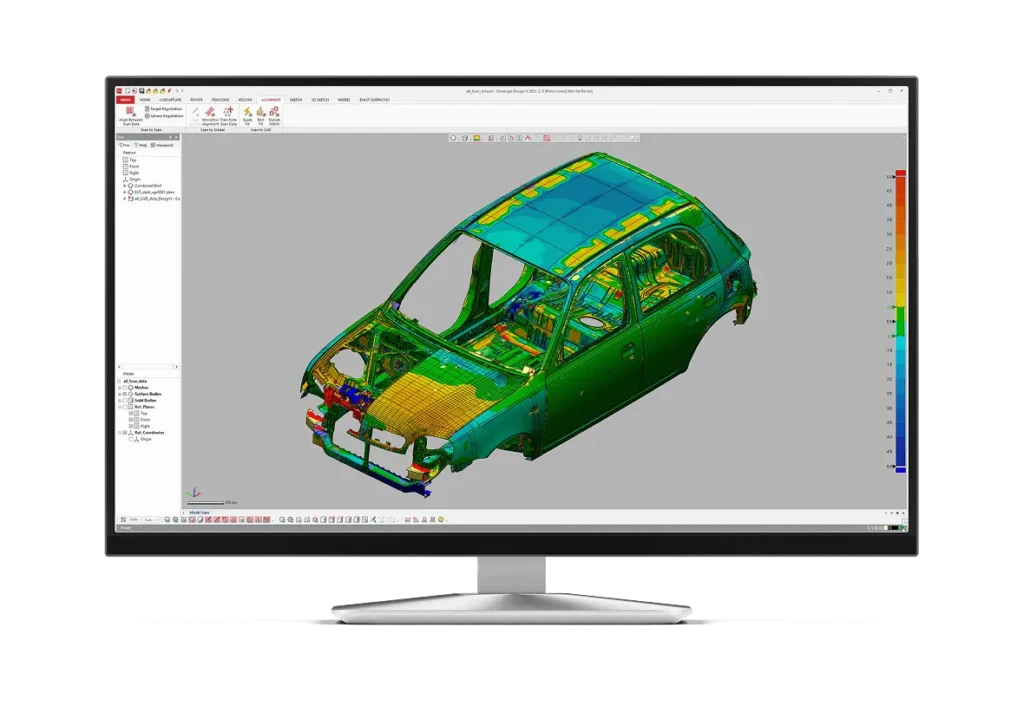
Once a vehicle-specific project is confirmed, the next step is to understand the chassis. Engineers need to know where the running board can be mounted, how much space is available, where the frame sits, where the board should deploy, and which components may cause interference.
The most important input is often the STL chassis scan. Combined with key measurements, vehicle information, and photos, it gives engineers the data needed to develop the correct fitment.
STL Chassis Scans
STL chassis data is one of the most important inputs for vehicle-specific power running board development. STL is a 3D mesh data format that represents the shape of the scanned vehicle structure.
Engineers can use the STL data to study:
- Chassis shape
- Frame structure
- Mounting areas
- Installation space
- Ground clearance
- Rocker panel position
- Nearby components
- Possible interference
This 3D reference allows engineers to check the available space around the running board before finalizing the design. It also helps them evaluate bracket positions and the relationship between the running board and nearby vehicle components.
An STL chassis scan gives engineers a 3D reference for evaluating vehicle fitment before the product is finalized.
Key Chassis Measurements
STL data provides the overall 3D reference, but key measurements are still useful for verification. They can help engineers confirm important dimensions and reduce the risk of measurement errors during development.
| Chassis Data | Why It Matters |
|---|---|
| Mounting point positions | Determines bracket locations |
| Mounting point distance | Determines bracket spacing |
| Chassis width | Helps define installation position |
| Chassis height | Helps determine bracket geometry |
| Ground clearance | Helps prevent interference |
| Rocker panel position | Determines board position |
| Wheelbase | Helps determine overall board length |
These measurements are especially useful when engineers need to verify specific dimensions from the 3D scan or compare the digital data with the actual vehicle.
Measurements support the STL data; they are not a replacement for accurate chassis data in the custom development process.
Photos of the Vehicle and Chassis
Photos help engineers visually confirm the vehicle and identify details that may need attention during development. They are useful for checking the actual installation environment and comparing it with the 3D chassis data.
Useful photos include:
- Vehicle underside
- Chassis and frame
- Front mounting area
- Rear mounting area
- Rocker panel
- Door area
- Surrounding components
Photos taken from different angles can also help engineers understand the available installation space. If possible, photos with a measuring tape can provide additional dimensional reference.
However, photos are supplementary. They cannot replace accurate chassis data when a new vehicle-specific fitment is being developed.
Vehicle Information
The vehicle must also be identified accurately before development starts. The same model name can cover different versions, body styles, or wheelbases.
Provide the following information:
- Brand
- Model
- Model year
- Body style
- 2-door or 4-door
- Wheelbase
- LHD or RHD
- Market or vehicle version, if relevant
This information helps engineers confirm which vehicle configuration the chassis data represents.
The more accurately the vehicle is identified, the lower the risk of developing the wrong fitment.
Is a CAD Drawing Required?
No. A CAD drawing is not usually required to start a custom power running board project.
For many vehicle-specific projects, the practical priority is:
STL chassis data → Key measurements → Vehicle information → Photos
If the customer already has a CAD drawing, it can be provided as an additional reference. It may help engineers understand existing vehicle or modification data, but the absence of a CAD drawing does not automatically prevent a custom project from starting.
The goal is to provide enough accurate vehicle data for engineers to understand the chassis, define the mounting points, check available space, and develop the power running board fitment correctly.
How Is STL Chassis Data Obtained for Custom Development?
Once the required chassis data is clear, the next question is where the STL data comes from. There are two common options: purchasing existing STL chassis data or scanning the actual vehicle.
The right option depends on whether accurate 3D data already exists for the specific vehicle. In either case, the data must match the actual vehicle version being used for development.
Purchase Existing STL Chassis Data
If an accurate 3D scan already exists for the required vehicle, the STL chassis data can be purchased from a professional 3D data provider.
This can save time when the vehicle is a common model with existing scan data. However, the data should be checked carefully before it is used for custom power running board development.
Before purchasing the data, confirm:
- Exact vehicle model
- Model year
- Body style
- Wheelbase
- Chassis version
- Market or vehicle version
Different versions of the same vehicle can have different chassis structures, mounting points, or available installation space. An STL file with the correct model name may still represent a different vehicle version.
The data must match the actual vehicle version.
For this reason, engineers should verify the vehicle specifications and data source before using purchased STL data for development.
Scan the Actual Vehicle
If suitable STL data is not available, the actual vehicle can be scanned by a professional 3D scanning company.
The process starts with the physical vehicle. The scanning company captures the chassis and surrounding installation areas and converts the scan into 3D data. The resulting STL chassis data can then be provided to engineers for fitment analysis and custom power running board development.
This method is especially useful for:
- Older vehicles
- Discontinued vehicles
- Rare 4x4s
- Less common models
- Special versions
Scanning the actual vehicle can provide direct 3D information when existing vehicle data is unavailable or does not match the required version.
For example, an older 4×4 may have limited digital data available from commercial sources. A physical vehicle can be scanned instead, giving engineers the chassis information needed to study mounting points, installation space, board position, and possible interference.
Whether the STL data is purchased or created through a 3D scan, the key requirement remains the same: the data must accurately represent the vehicle version being developed.
Case Study: Custom Power Running Boards for the Toyota Land Cruiser LC80
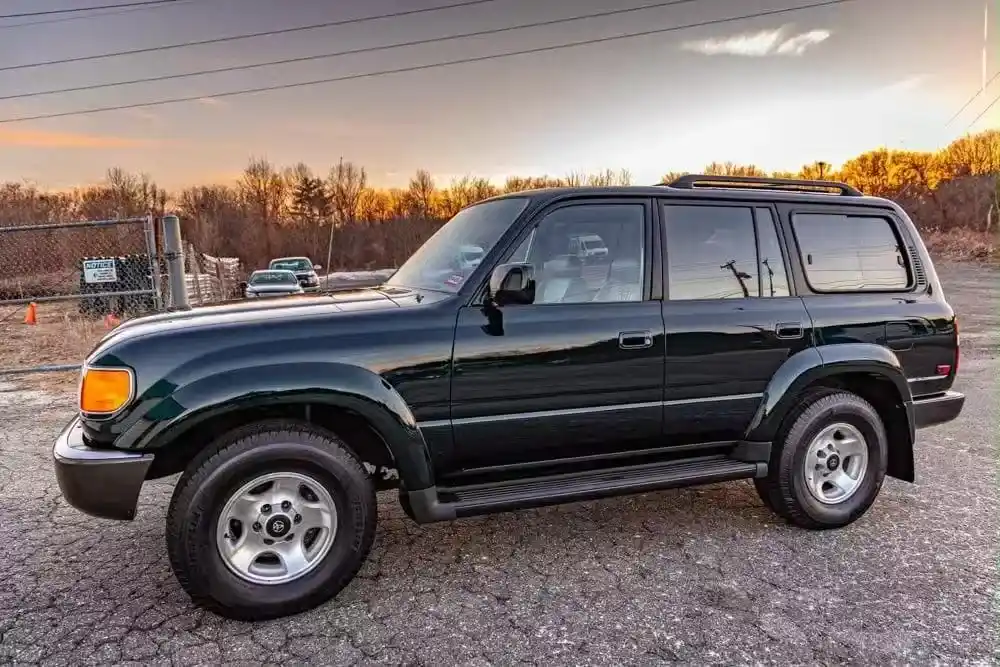
A real vehicle-specific project shows how the process works in practice. The Toyota Land Cruiser LC80 is a classic 4×4 with an older chassis design, making it a useful example of how custom power running boards can be developed around a specific vehicle.
Why the LC80 Required a Custom Solution
The Land Cruiser LC80 is an older 4×4 platform. Standard power running boards have limited coverage for some older and less common vehicles, so a suitable solution may require development based on the actual chassis structure.
For an LC80 project, the goal is not simply to find a standard board with a similar length. The running board system needs to match the vehicle’s mounting areas, available space, and chassis geometry.
This is where custom power running boards can provide a practical solution. Instead of adapting a product without knowing whether the fitment is correct, engineers can develop the system around the actual LC80 structure.
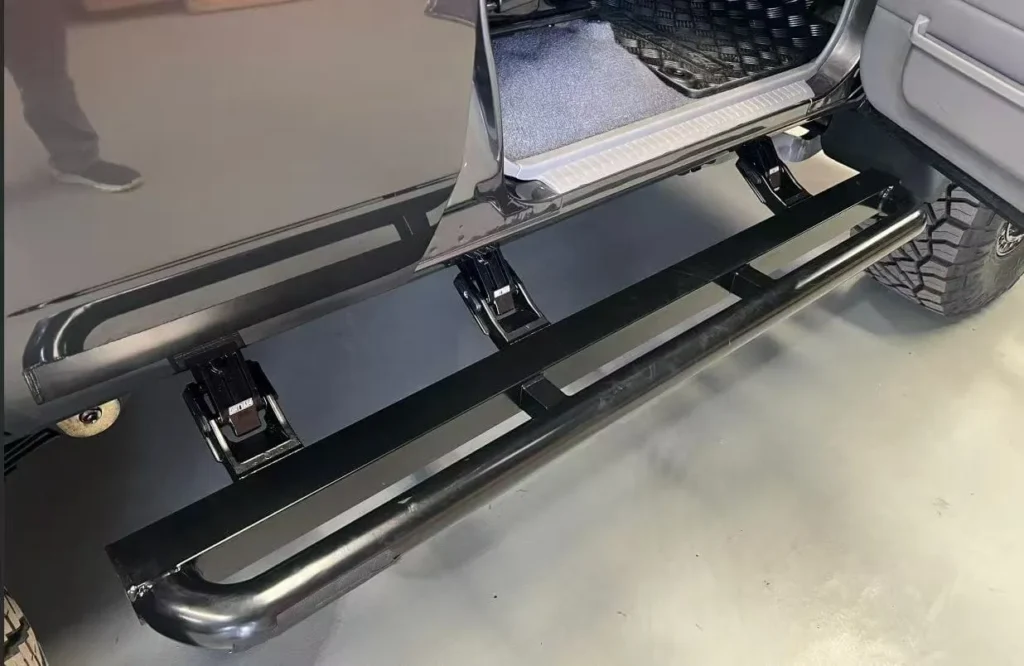
Starting With LC80 Chassis Data
The LC80 project started with accurate chassis data. This gave engineers a 3D reference for studying the areas where the power running boards would be installed.
The chassis data was used to analyze:
- Frame structure
- Mounting areas
- Installation space
- Ground clearance
- Rocker panel position
- Potential interference points
These details helped define the basic installation conditions before the bracket and running board design was finalized.
Designing the LC80 Brackets and Running Board
The next step was to develop the running board system around the LC80 chassis structure. The engineers needed to determine the bracket locations and geometry based on the available mounting areas.
The development also considered:
- Bracket locations
- Bracket geometry
- Board position
- Motor position
- Linkage arrangement
- Clearance
This means the development was not based on simply changing the length of a standard running board. The mounting structure and moving mechanism also had to work with the LC80.
The running board system was developed around the vehicle, rather than forcing a standard system onto it.
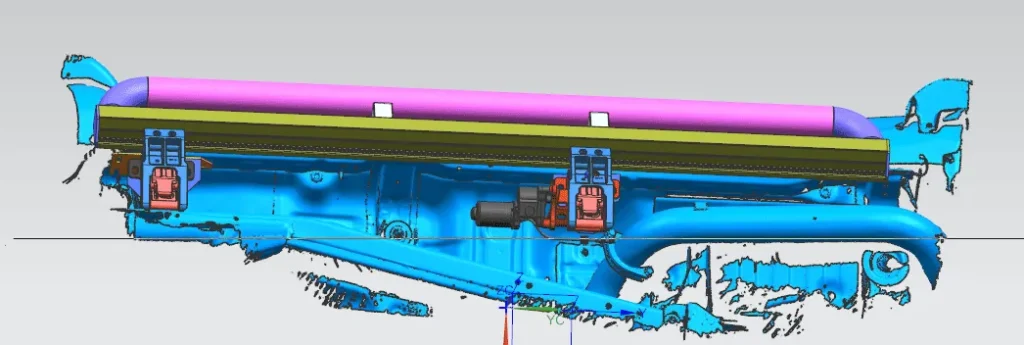
Fitment Testing on the LC80
After the design was completed, the next step was physical fitment validation on the LC80.
Engineers checked:
- Bracket fitment
- Mounting position
- Board deployment
- Board retraction
- Ground clearance
- Door clearance
- Possible interference
- Overall appearance
Fitment testing helps confirm whether the digital design matches the physical vehicle. Engineers check the bracket fitment, board movement, clearance, and possible interference before final production.
For detailed installation information, see the LC80 Power Running Boards Installation Instructions.
What the LC80 Project Shows
The LC80 project shows that vehicle-specific power running boards can be developed even for an older or less common 4×4 when accurate chassis data is available.
The key is to develop the running board system around the actual vehicle structure. Accurate chassis data gives engineers a reliable starting point, while fitment testing helps confirm that the brackets, board, motor, linkage, and available clearance work together correctly.
How to Find a Custom Power Running Board Manufacturer?
Finding a custom power running board manufacturer is about more than checking a product catalog. The key is to find a supplier that can develop a running board for your specific vehicle.
Check Vehicle-Specific Development Capability
Look for a manufacturer that can handle STL chassis data, custom bracket design, prototype development, fitment testing, and OEM/ODM production. These capabilities are especially important for older, discontinued, or less common 4x4s.
Look for Real Custom Development Cases
Do not rely only on “Custom OEM/ODM” on a supplier’s website. Check for actual vehicle-specific projects, prototype photos, custom brackets, and vehicle fitment examples. Experience with different vehicle platforms can show whether the manufacturer has real development capability.
Work With MAX Running Boards
MAX Running Boards provides vehicle-specific power running board development, including STL chassis analysis, custom bracket design, fitment testing, and OEM and ODM Services.
MAX Running Boards has developed custom solutions for various vehicle platforms, including Toyota Hilux, Ford Ranger, and Isuzu models. The typical MOQ for custom projects is 30 sets, with a lead time of around one month, depending on the project requirements.
If your 4×4 does not have a suitable standard power running board, contact MAX Running Boards to discuss your custom development project.
Conclusion
Custom power running boards give 4×4 shops, dealers, and distributors a way to serve vehicle applications that standard products cannot cover. MAX Running Boards supports custom development and batch production, with experience across platforms such as Toyota Hilux, Ford Ranger, and Isuzu.
Need custom power running boards for a specific 4×4? Contact MAX Running Boards for batch orders from 30 sets, with a typical lead time of around one month.
