
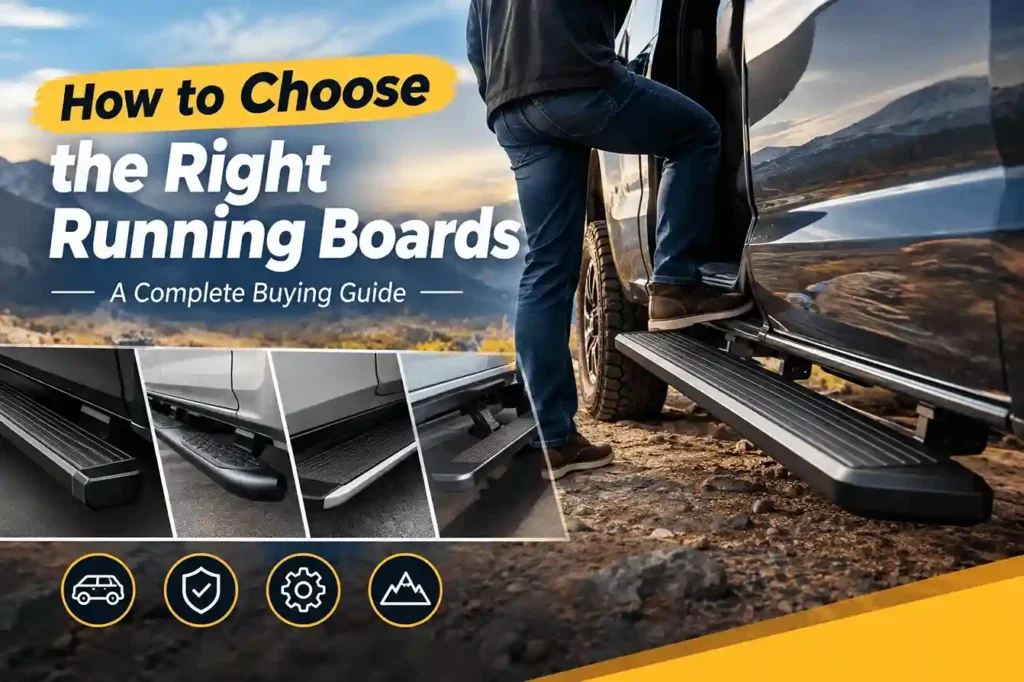
Choosing the right running boards can make a truck or SUV easier to enter and exit. A good set gives passengers a stable step, adds comfort for daily use, and can improve the vehicle’s appearance. But looks should not be the only factor.
Before you choose running boards, consider how you use the vehicle. Check the step height, board width, surface grip, ground clearance, vehicle fit, and long-term cost. These factors affect comfort, safety, durability, and daily usability.
For most family vehicles and daily drivers, wide and flat running boards offer a comfortable step for adults and children. Lifted trucks and SUVs often need a lower step solution to reduce the distance from the ground to the cabin. If you want a clean side profile and more ground clearance when driving off-road, power running boards can be a better choice because the boards retract under the vehicle when the doors close.
This guide explains how to choose running boards based on your vehicle, driving needs, and budget.
Choose the Right Type of Running Boards
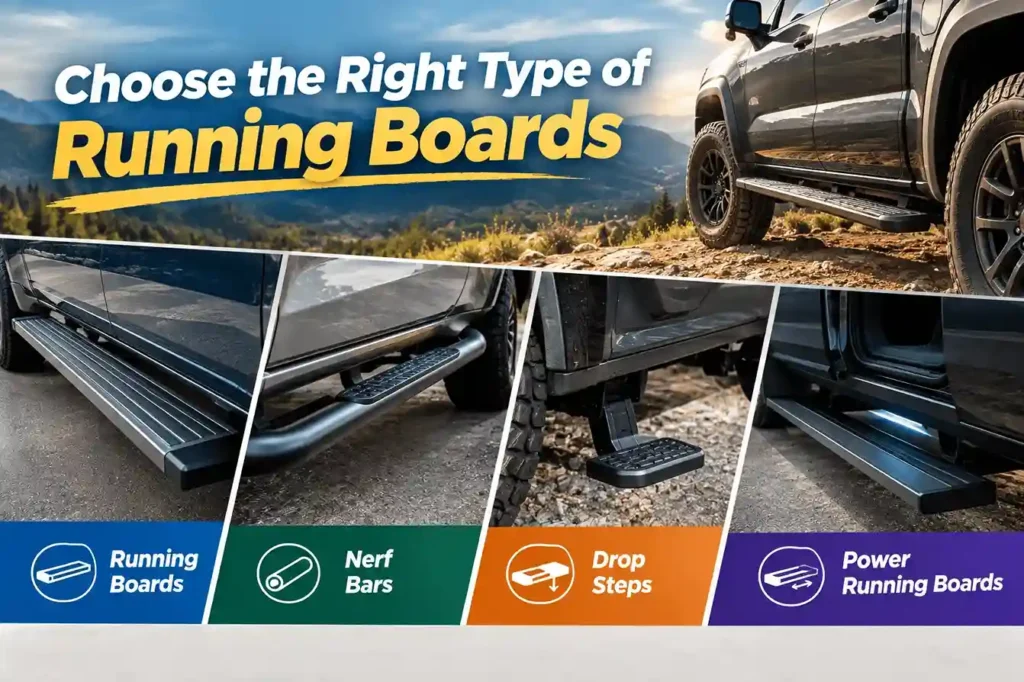
The first step is to choose the type of running board that matches your vehicle and daily use. Different side steps solve different access needs. A family SUV may need a wide and stable step, while a lifted truck may need a lower step height. A driver who spends time off-road may also want more ground clearance when the step is not in use.
| Type | เหมาะที่สุดสำหรับ | Main advantage | Main trade-off |
|---|---|---|---|
| Running Boards | Families and daily drivers | Wide, stable step surface | Fixed boards remain visible below the cab |
| Nerf Bars | Simple access and rugged styling | Slim, straightforward design | Less continuous step space |
| Hoop Steps and Drop Steps | Lifted trucks and taller vehicles | Lower first step | Can reduce ground clearance |
| บันไดข้างแบบไฟฟ้า | Convenience and a clean appearance | Retract when not needed | Higher cost and more moving parts |
Running Boards
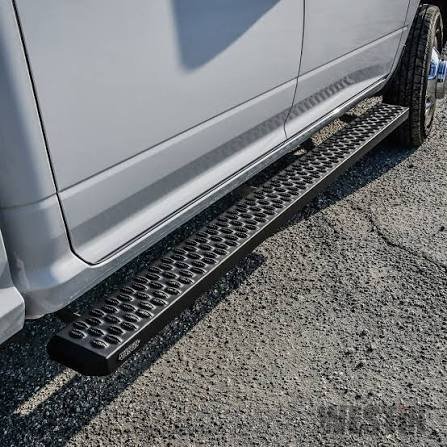
Running boards are wide, flat steps that run along the side of the vehicle. They provide more usable foot space than many tubular step bars, making them a practical choice for passengers who get in and out of the vehicle frequently.
They work well for family vehicles, daily drivers, and trucks where a wide and stable step is more important than a narrow profile.
เหมาะที่สุดสำหรับ: Families, daily drivers, and anyone who wants a wide, stable step surface.
Nerf Bars
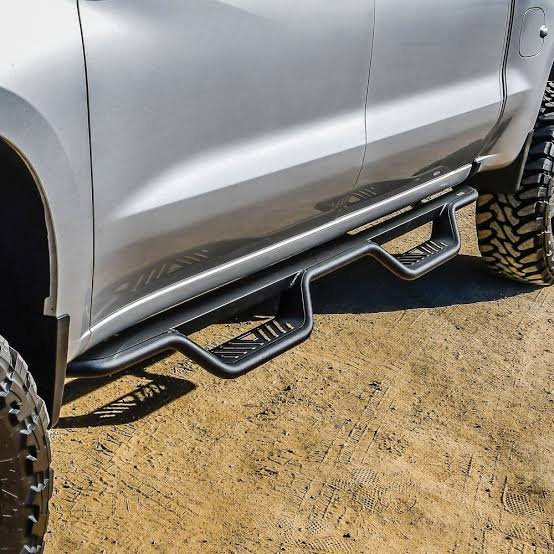
Nerf bars use a narrower tubular design along the side of the vehicle. They usually provide a step pad near each door without covering as much of the vehicle’s side.
This style gives basic vehicle access while keeping a simple and rugged truck appearance. The narrower design also leaves more of the vehicle’s lower body visible.
เหมาะที่สุดสำหรับ: Drivers who want a simple step, a tubular design, and a rugged appearance.
Hoop Steps and Drop Steps

Drop steps place the stepping point lower than the vehicle’s rocker panel. The lower position can make taller trucks and SUVs easier to enter, especially after a lift or when the vehicle already has a high step-in height.
Because the step sits lower, it can also be closer to curbs, rocks, and other obstacles. Ground clearance should be checked before choosing this type.
เหมาะที่สุดสำหรับ: Lifted trucks, tall SUVs, work vehicles, and drivers who need a lower step point.
บันไดข้างแบบไฟฟ้า
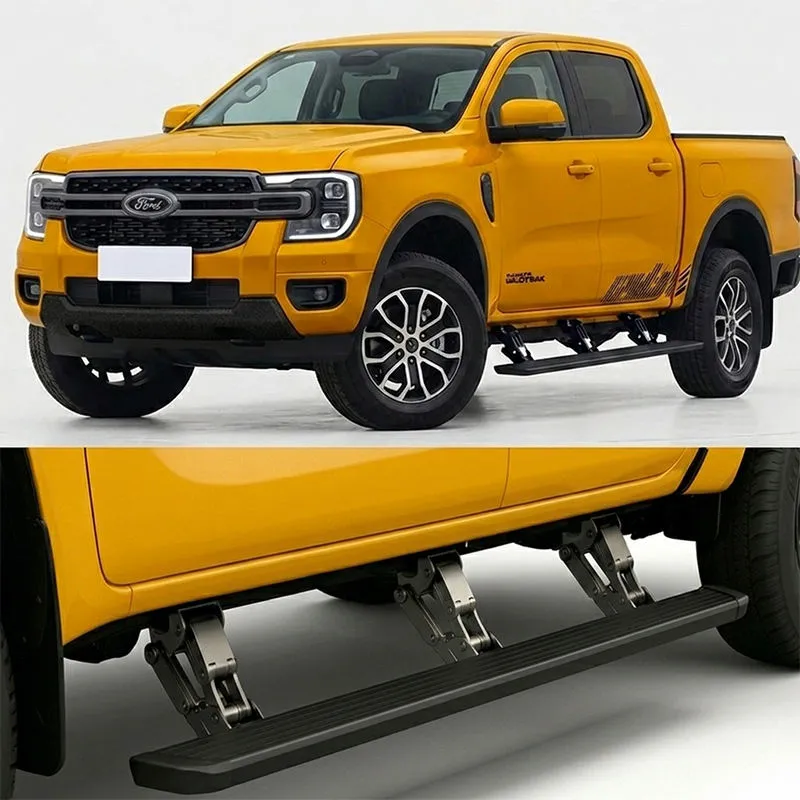
Power running boards are motorized steps that extend when the door opens and retract under the vehicle when the door closes. This gives passengers a usable step when entering while keeping the boards out of the way when driving.
The retractable design can provide a cleaner side profile and help preserve ground clearance compared with some fixed running boards. Power running boards also offer more convenience, but they cost more and have additional moving and electrical components.
เหมาะที่สุดสำหรับ: Drivers who want easier access, a clean appearance, and a retractable step.
Start by deciding whether you need a wide flat step, a narrow tube step, a lower step point, or a retractable step. Once you know the right type, you can compare the other factors that affect comfort, fit, and long-term use.
If you are ready to compare available products, see MAX Running Boards’ Retractable Running Boards for vehicle-specific options.
For a deeper comparison of running boards, nerf bars, side steps, drop steps, and power steps, see our complete guide to Types of Side Steps for Trucks.
Choose Running Boards Based on How You Use Your Vehicle
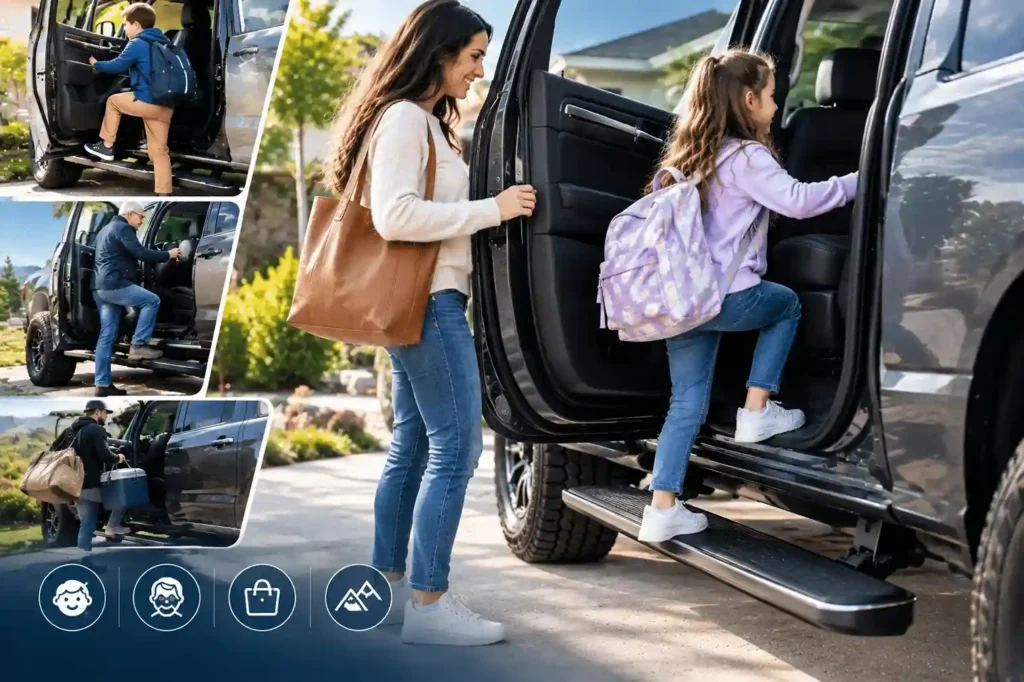
The best running boards depend on how you use your truck or SUV. A family vehicle has different needs from a work truck. A lifted truck also needs a different step height from a stock-height SUV.
Before comparing brands or features, think about who uses the vehicle, how often they step in and out, and where they usually drive. This simple step can narrow your choices quickly.
| Vehicle Use | What to Prioritize | Running Board Style to Consider |
|---|---|---|
| Family and daily driving | Wide step, stable footing, easy cleaning | Full running boards or power running boards |
| Work truck and bed access | Grip, durability, load support, easy cleaning | Wheel-to-wheel running boards |
| Lifted truck or SUV | Lower first step, practical step height | Drop steps or power running boards |
| Light off-road and outdoor use | Ground clearance, easy cleaning, weather resistance | Compact running boards or power running boards |
For Families and Daily Drivers
Families usually need a running board that feels easy and stable underfoot. A wide, flat surface gives adults and children more room to place their feet. It also helps passengers who carry bags or need extra support when getting into the vehicle.
Full running boards work well for this use because they provide a continuous step along the vehicle. Power running boards can also work well if the vehicle owner wants easier access without keeping a fixed board below the doors.
Think about the people who use the vehicle most often. Children, older passengers, and people carrying groceries or bags can benefit from a larger usable step area. In these situations, practical step space often matters more than an aggressive exterior style.
For Work Trucks and Frequent Bed Access
Work trucks need a running board that can handle frequent use. Focus on a stable step, good surface grip, clear load information, and easy cleaning.
If you often reach into the front part of the truck bed, consider wheel-to-wheel running boards. This design extends the step farther toward the rear wheel area. It can make it easier to reach tools, cargo, and equipment near the front of the bed.
This setup can be useful with a crossover toolbox, bed rack, or other bed-mounted equipment.
For Lifted Trucks and Taller Vehicles
Lifted trucks and tall SUVs can have a large distance between the ground and the cabin floor. In this case, the first step height should be a key factor.
A lower step can make entry easier than a standard-height board. Drop steps provide a lower stepping point, while บันไดข้างแบบไฟฟ้า can combine a lower step with a cleaner side profile when retracted.
Do not choose a step based only on the lift kit height. Check the actual door sill height and think about who uses the vehicle every day. A setup that works for a tall driver may feel different for children or shorter passengers.
For Light Off-Road and Outdoor Use
Outdoor driving adds a few practical concerns. Mud, sand, water, and road debris can collect on the step area. Choose a design that is easy to clean and can handle regular exposure to outdoor conditions.
Ground clearance also matters. A running board that sits too low can contact rocks, deep ruts, or other obstacles. A compact board or retractable power running board can reduce this concern while still providing a useful step for normal road driving.
For serious rock crawling or rocker-panel protection, choose dedicated rock sliders, not ordinary running boards. Rock sliders serve a different purpose and provide protection that a standard step is not built to replace.
The right choice starts with your daily use. Once you know who uses the vehicle and where the vehicle spends most of its time, you can focus on the specific features that matter most.
A compact board or retractable power running board can reduce this concern while still providing a useful step for normal road driving. For more examples of where retractable steps can be useful, see MAX Running Boards’ guide to Power Running Board Use Cases.
Look at Step Surface, Traction, and Coverage
A running board should give passengers a stable and comfortable place to step. Before buying, look beyond the overall size of the board. The usable stepping area, tread pattern, door coverage, and weight capacity all affect how well the running board works in daily use.
Choose a Step Surface You Can Use Comfortably
The total width of a running board does not always tell you how much space you can actually use. Check the usable stepping area and see where the tread or step pad is positioned under each door.
A wider, flatter step usually works well for families, children, older passengers, people wearing work boots, and anyone who gets in and out of the vehicle frequently. More usable foot space also helps when passengers are carrying groceries, tools, or other items.
For tube-style running boards, do not treat tube diameter as usable step width. A round tube may have a larger overall diameter but still provide a smaller area for stable foot placement.
Before buying, check:
- Actual usable stepping area
- Step pad size and position
- Tread texture
- Coverage under each door
- Clearance between the step and the ground
Check Traction in Your Driving Conditions
The step surface needs to work in the conditions where you actually drive. Rain, snow, mud, and sand can make a smooth surface harder to use.
Look for textured tread, rubber step pads, grooves, and drainage features. These features can provide better foot grip and help water and debris move away from the stepping area.
Do not assume that a round tube is unsafe or that a wide flat board automatically provides better traction. The actual surface texture and usable foot area matter more.
| Driving Condition | What to Look For |
|---|---|
| Dry roads | Textured tread and stable foot placement |
| Rain | Grip and water drainage |
| Snow | Non-slip surface and easy cleaning |
| Mud and sand | Drainage and a tread that is easy to clean |
Choose Between Cab-Length and Wheel-to-Wheel
Running board length should match how you use the vehicle.
| คุณสมบัติ | Cab-Length | Wheel-to-Wheel |
|---|---|---|
| วัตถุประสงค์หลัก | Cabin access | Cabin and bed access |
| Coverage | บริเวณประตู | Door area to rear wheel area |
| เหมาะที่สุดสำหรับ | Daily drivers and passenger access | Work trucks and frequent bed access |
| Bed access | จำนวนจำกัด | Better |
| Common use | Getting in and out of the cabin | Tools, cargo, toolbox, and bed rack |
Cab-length running boards are usually enough if passengers mainly need help getting into and out of the cabin. Wheel-to-wheel running boards make more sense if you regularly reach into the front part of the truck bed.
For more detail on this style, see Wheel-to-Wheel Running Boards.
Check the Listed Weight Capacity
Do not assume that all running boards support the same load. Check the manufacturer-listed weight capacity for the exact running board and vehicle application.
The complete system matters. The board, brackets, mounting points, and installation method can all affect the final capacity. Also check the installation instructions and intended use instead of judging strength only by whether the board is made from aluminum or steel.
Before buying, compare the listed capacity with how the vehicle will actually be used, especially for work trucks and vehicles with frequent passenger or cargo access.
Choose Materials and Finishes for Your Climate
The right material depends on more than strength or appearance. Your climate, driving conditions, maintenance habits, and how often you use the vehicle should all factor into the choice. A running board that works well in a dry climate may need more attention in an area with road salt, heavy rain, or coastal moisture.
อลูมิเนียม
Aluminum is lightweight and generally offers good resistance to corrosion. It can be a practical choice for daily drivers who want to reduce concerns about rust and for vehicles regularly exposed to moisture.
This can make aluminum running boards suitable for coastal areas, wet climates, and regions where road salt is used during winter. However, the complete running board system still matters. Check the brackets, fasteners, and surface finish rather than judging corrosion resistance from the board material alone.
Steel
Steel running boards are common on work-oriented and heavy-duty applications. They can also suit drivers who prefer a more solid or rugged appearance.
With steel, pay close attention to the protective coating. Scratches from rocks, mud, road debris, or regular use can damage the coating and expose the metal underneath. This is especially important in wet areas and on roads treated with salt.
A powder-coated steel running board can provide useful surface protection, but regular cleaning and inspection still matter if the vehicle is exposed to harsh conditions.
Stainless Steel
Stainless steel is often chosen for its bright, polished appearance and its resistance to corrosion. It can work well when the visual finish of the running board is an important part of the vehicle’s exterior style.
Keep in mind that a corrosion-resistant material does not mean a maintenance-free surface. Water spots, mud, road salt, and other deposits can still affect the appearance. Follow the specific product’s cleaning instructions and check the material used for the brackets and fasteners as well.
Choose the Finish Based on Your Use
The finish affects both appearance and day-to-day maintenance.
| Finish | รูปลักษณ์ | Practical Consideration |
|---|---|---|
| Textured black / powder-coated | Modern and rugged | Everyday marks and light scratches may be less noticeable |
| Polished | Bright and clean | More visible water spots and dirt |
| Stainless-style | Bright, factory-style appearance | Regular cleaning may be needed to maintain the finish |
For most daily drivers and work trucks, a textured or powder-coated finish can be easier to live with. Polished and stainless-style finishes can give the vehicle a more noticeable appearance but may need more frequent cleaning to stay looking clean.
When comparing materials, do not look at the step surface alone. Brackets, fasteners, protective coatings, drainage, and regular cleaning all affect long-term durability. The best material is the one that fits the vehicle’s environment and the amount of maintenance the owner is willing to do.
Balance Easy Entry With Ground Clearance
A lower step can make a truck or SUV easier to enter, but lowering the step too much can create other problems. The right height depends on the vehicle, the people using it, and where the vehicle is driven.
Lower Isn’t Always Better
A lower step reduces the distance between the ground and the vehicle’s cabin. This can be especially useful for children, older passengers, lifted vehicles, and drivers who get in and out frequently.
However, a fixed step that sits low and extends far from the vehicle can also come closer to curbs, deep snow, rough roads, and light off-road obstacles. It may also be more exposed to rocks and road debris.
| Priority | สิ่งที่ควรพิจารณา |
|---|---|
| Easier entry | Lower and easy-to-reach stepping point |
| Lifted vehicle | Step height relative to the actual cabin floor |
| การขับขี่ประจำวัน | Comfortable entry without unnecessary low clearance |
| Rough roads | Keep the step away from common obstacles |
The goal is not to choose the lowest possible step. It is to find a height that makes entry comfortable without creating an unnecessary clearance problem.
Choose Based on How High Your Truck Actually Sits
Do not choose a running board based only on the number of inches listed for a lift or leveling kit. The final step height depends on the actual vehicle setup.
Park the vehicle on level ground and look at the distance from the ground to the door sill. If possible, step into the vehicle and check whether the first step feels comfortable for the people who use it most.
Large tires, a leveling kit, a lift kit, or a naturally high factory ride height can all change the entry height. The best running board is the one that solves the actual step-in problem rather than simply matching a suspension specification.
For vehicle-specific applications, the mounting bracket can also affect how far the step extends below the vehicle. MAX Running Boards can customize bracket positions for different vehicle heights and mounting requirements, with certain applications using approximately 8.7 to 10.6 inches (220–270 mm) of extension.
This can be useful for lifted trucks and SUVs where a standard bracket may not place the step at a comfortable height. Instead of choosing a running board based only on the vehicle’s lift height, check the actual distance from the ground to the cabin and the position of the deployed step.
For a closer look at how step height and drop affect running board selection, see the Power Running Board Drop Height Guide.
When Power Running Boards Make Sense
Power running boards can be useful when you want a lower and wider step when entering the vehicle but do not want a fixed board hanging below the rocker panel while driving.
The board extends when the door opens and retracts when the door closes. This can give passengers an easier step while keeping more clearance under the vehicle during normal driving.
There is a maintenance trade-off. Power running boards add convenience, but their motors and moving parts need more attention in mud, snow, ice, and road-salt conditions. Regular cleaning can help keep the moving parts working properly and reduce buildup around the mechanism.
If easy entry is your main priority, focus on the actual step height. If clearance is equally important, consider whether a retractable design gives you a better balance than a permanently lowered step.
Confirm Fitment and Installation Before You Buy
A running board can look right in a photo and still be wrong for your truck. Confirm fitment before you compare colors, finishes, or brands.
A vehicle-specific running board should match the exact vehicle configuration and mounting points. Small differences in model year, cab style, body generation, or factory equipment can affect whether a running board fits correctly. Checking these details before ordering can help prevent returns, extra modifications, and installation problems.
Confirm the Vehicle Details
Start with the basic vehicle information. Do not rely on the vehicle model name alone if the product listing shows different applications.
Before buying, check:
- Year, make, and model
- Cab style and door layout
- Body generation or special edition, when listed
- Cab-length or wheel-to-wheel coverage
- Lifted, leveled, or otherwise modified status
- Factory side steps, body cladding, mud flaps, or other accessories that may affect installation
For trucks with several cab or bed configurations, confirm the exact application listed by the manufacturer. A running board made for a similar model may still have different mounting points or board coverage.
Check the Mounting Method
The mounting method can affect both fitment and installation time.
Look for products that clearly state whether they use factory mounting points and whether the application is no-drill. Also check if the installation requires drilling, additional hardware, modifications, or changes to existing vehicle components.
A no-drill design can make installation simpler, but do not assume that every no-drill product fits every vehicle configuration. Always follow the product installation instructions and check the vehicle manufacturer’s warranty terms before making modifications.
For power running boards, also confirm whether the vehicle-specific kit includes the correct brackets and electrical components for that application.
Confirm What Is Included
Check the product listing or quotation to see exactly what comes with the running board kit.
| รายการ | What to Confirm |
|---|---|
| Running boards | Driver-side and passenger-side boards |
| วงเล็บ | Correct brackets for the specific vehicle |
| Hardware | Required bolts, nuts, clips, and other mounting hardware |
| Instructions | Vehicle-specific or product installation instructions |
| การเดินสาย | Wiring harness for power running boards |
| ผู้ควบคุม | Controller or control module, when required |
| Electrical parts | Fuses and other listed electrical components |
Do not assume that every running board package includes the same components. This is especially important for power running boards because the electrical system may require additional parts that are not needed for fixed running boards.
Keep Installation Guidance Simple
Installation difficulty depends on the product and vehicle. No-drill, vehicle-specific running boards are generally easier to install than systems requiring drilling, modifications, or electrical wiring. If you are unsure about fitment, electrical connections, or clearance, professional installation is the safer choice.
For power running boards, installation also involves connecting the wiring and control system. If you want to understand the basic process before buying, see our guide to วิธีติดตั้งบันไดข้างแบบ Power Running Boards.
Before placing an order, confirm the exact vehicle application, mounting method, included components, and installation requirements. Spending a few minutes checking these details can prevent a much bigger problem after the running boards arrive.
สรุป
Choosing the right running boards starts with how the vehicle is used, not just how the product looks. Consider the type of step, usable stepping area, traction, coverage, material, vehicle height, ground clearance, and exact fitment before making a decision.
For family and daily-use vehicles, a wide and stable step may be the priority. Work trucks may benefit from wheel-to-wheel coverage and a durable, easy-to-clean surface. Lifted trucks and SUVs may need a lower stepping point, while power running boards can provide easier access without keeping a fixed step below the vehicle when driving.
The total value also depends on installation, maintenance, warranty coverage, and whether the complete kit matches the vehicle. Taking a few minutes to confirm these details can help you choose running boards that fit your vehicle and your daily needs.
If you are looking for power running boards for your vehicle, dealership, workshop, or private-label brand, MAX Running Boards supports vehicle-specific customization, OEM & ODM projects, and wholesale orders.
ติดต่อ MAX Running Boards for power running board product details, vehicle fitment, and wholesale pricing.
