
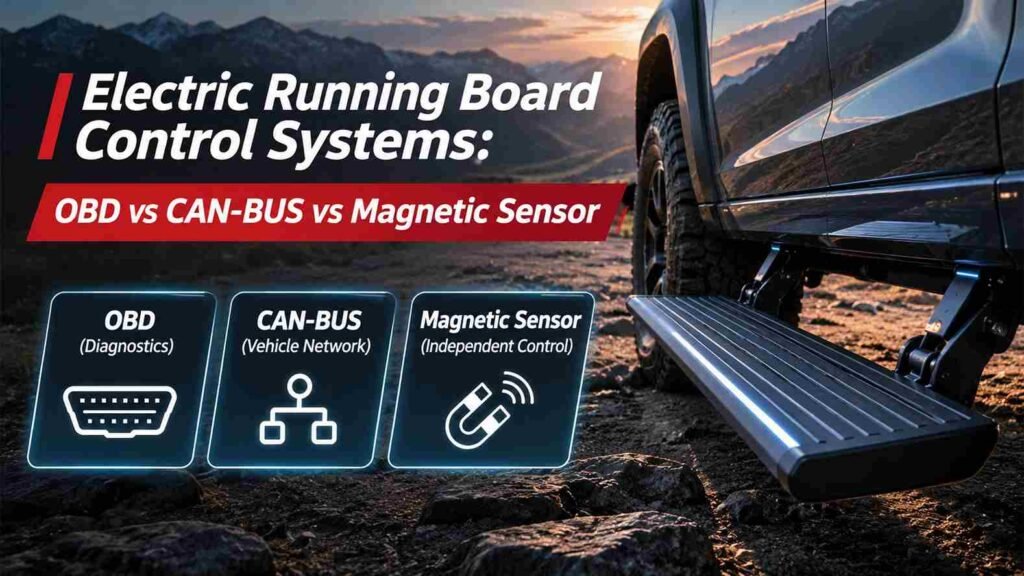
Electric running board control systems detect when vehicle doors open or close and control the movement of electric steps. These systems generally use two methods: vehicle electronic signals or independent magnetic sensors. OBD electric running boards and CAN-BUS electric running boards both use vehicle data, but they differ in how the controller accesses these signals. Magnetic sensor systems detect door movement without relying on vehicle electronic data.
For 4×4 shops and dealers, the control system affects vehicle compatibility, installation time, reliability, and maintenance. This guide compares these factors and shares a real Toyota Land Cruiser LC80 project from MAX Running Boards.
What Are the Two Main Types of Power Running Board Control Systems?
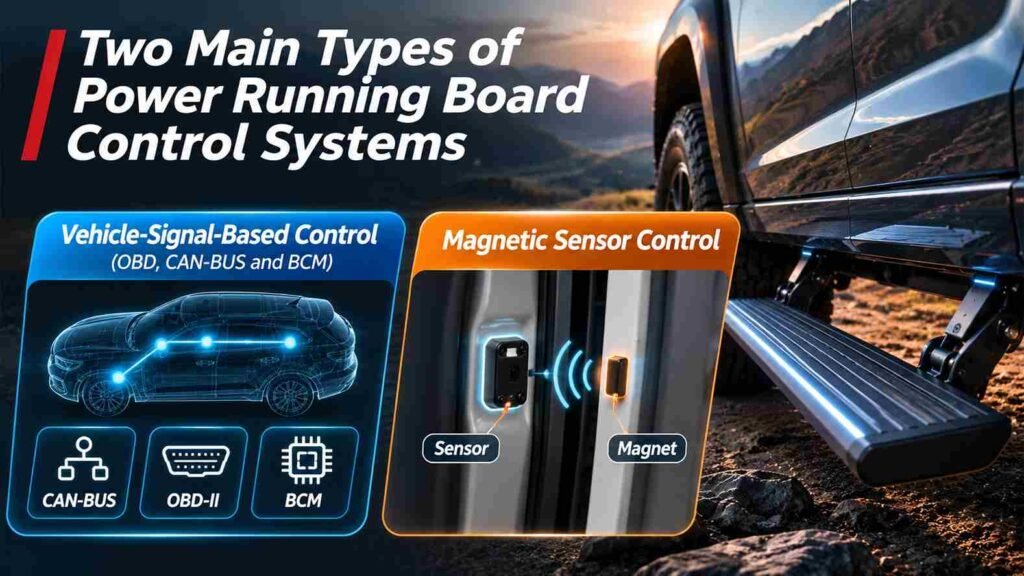
Electric running board control systems fall into two main groups based on how they detect door status: vehicle-signal-based control and magnetic sensor control.
Vehicle-Signal-Based Control (OBD, CAN-BUS and BCM)
Vehicle-signal-based systems use available electronic signals to identify whether a door is open or closed. The electric running board controller reads supported vehicle data and sends commands to the steps.
These systems involve three related technologies:
- CAN-BUS: A communication network that allows electronic modules inside a vehicle to exchange data.
- OBD-II: A vehicle diagnostic system and interface. Some controllers can access supported vehicle data through its diagnostic port.Learn more in the OBD-II technical guide from CSS Electronics.
- BCM: The Body Control Module, which may manage or monitor door status.
OBD, CAN-BUS, and BCM are related parts of vehicle electronics, rather than three separate control methods.
Magnetic Sensor Control
Magnetic sensor systems use a magnet and a sensor to detect changes in the magnetic field as a door opens or closes. This detection method is also used in automotive applications, as explained in Texas Instruments’ technical guide.
These systems work without door status data from the vehicle’s CAN network. Their performance depends on sensor range, placement, and secure mounting.
For more details on step movement, read our How Do Power Running Boards Work? guide.
OBD/CAN-BUS vs Magnetic Sensors: What Are the Key Differences?
OBD/CAN-BUS-based control and magnetic sensor control differ mainly in how they detect door status. Both can operate electric running boards, but they have different compatibility, installation, and maintenance requirements.
| Feature | OBD/CAN-BUS-Based Control | Magnetic Sensor Control |
|---|---|---|
| Signal Source | Supported vehicle electronic signals | Independent magnetic detection |
| Door Detection | Reads available vehicle data | Detects magnetic field changes |
| Vehicle Compatibility | Depends on vehicle electronics | Depends on sensor suitability and placement |
| Installation Time | Varies by vehicle and configuration | Varies with sensor placement and adjustment |
| Installation Complexity | Requires verified signal compatibility | Requires accurate sensor placement |
| Reliability Factors | Signal recognition and controller support | Sensor alignment and environmental conditions |
| Maintenance | Controller and communication checks | Sensor inspection and adjustment |
| Main Limitation | Vehicle-specific signal availability | Physical sensor positioning |
| Best Application | Vehicles with verified electronic compatibility | Vehicles suited to independent door detection |
Installation time matters for 4×4 shops because it affects labor costs and workshop efficiency. However, neither system is always faster to install. Vehicle design, controller compatibility, and sensor adjustment can all affect the time required.
Both control methods have practical advantages. OBD/CAN-BUS-based systems work well when the vehicle provides supported electronic signals. Magnetic sensors offer an alternative when suitable door data is unavailable. The best choice depends on vehicle electronics, operating conditions, and confirmed compatibility.
How Does Vehicle Compatibility Affect Electric Side Step Control Systems Selection?
Vehicle compatibility plays a major role in choosing electric running board control systems. Different vehicles may require different control methods, even within the same brand.
Vehicle Model, Year and Electronic Architecture
Vehicle manufacturers use different electronic systems across models, production years, and regional markets. A control system that works on one vehicle may not support another version of the same model.
For OBD/CAN-BUS electric running boards, dealers should check three factors:
- Vehicle Model and Year: Electronic systems may change between production years.
- Market Configuration: Vehicles sold in different regions may have different electronic features.
- Signal Compatibility: The controller must recognize the available door status signals.
Dealers should verify these details before ordering. A brand name such as Toyota, Ford, or Nissan cannot confirm compatibility on its own.
Real Application Example: Toyota Land Cruiser LC80
MAX Running Boards selected magnetic sensor control for a custom electric running board project involving the older Toyota Land Cruiser LC80.

The LC80’s older electronic architecture makes modern OBD-based door detection difficult. MAX chose magnetic sensors to detect door status without relying on vehicle electronic data.
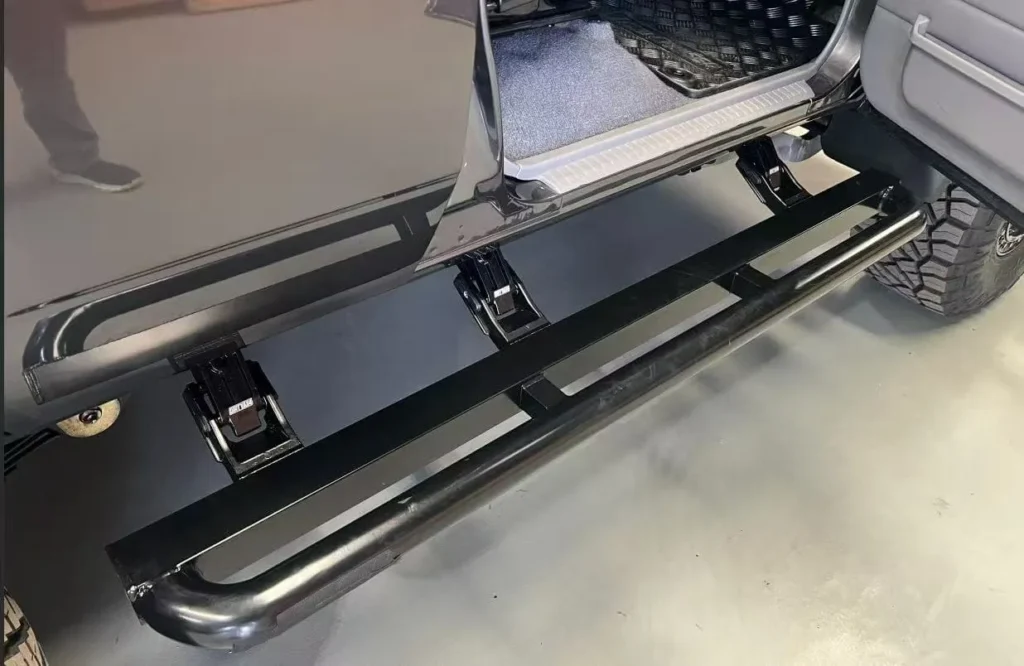
- Vehicle: Toyota Land Cruiser LC80
- Control Method: Magnetic sensor control
- Main Challenge: Limited support for modern OBD-based door detection
- Reason for Selection: Independent door detection better suited the vehicle’s electronic architecture
Response times may vary between control configurations. However, reliable door detection and vehicle compatibility matter more than choosing newer technology.
Vehicle Body Materials and Sensor Positioning
Some vehicles use aluminum body panels, which require attention to sensor mounting. Magnetic detection does not require magnets to attach directly to steel panels.
Installers should also consider door structure, existing vehicle modifications, and sensor positioning. These factors can affect sensor alignment and reliable door detection.
What Reliability and Maintenance Issues Should Dealers Consider?
Reliability depends on accurate door detection, controller compatibility, and installation quality. For 4×4 shops and dealers, these factors can affect customer satisfaction, warranty claims, and after-sales costs.
Vehicle Signal Recognition and Controller Compatibility
OBD/CAN-BUS-based systems need a controller that can recognize the target vehicle’s door status signals. Differences in vehicle electronics or software versions may affect compatibility.
Dealers should confirm:
- Signal Recognition: Can the controller detect door status correctly?
- Vehicle Compatibility: Does the supplier support the exact model and year?
- Technical Support: Can the supplier help identify control issues?
Magnetic Sensor Alignment and Environmental Conditions
Magnetic sensors depend on correct positioning and stable mounting. Sensor movement or poor alignment may cause incorrect door detection.
Vibration, water, dust, and long-term use can also affect sensor performance. Proper sensor design and secure mounting help reduce these risks.
Troubleshooting and After-Sales Support
Dealers may encounter several control-related issues:
- No Step Movement: The running board fails to extend or retract.
- One-Side Failure: A door does not trigger the expected step movement.
- Unexpected Activation: The step responds without the intended door action.
These symptoms do not always indicate a faulty controller or sensor. Dealers should work with suppliers that provide clear technical guidance and replacement part support.
For related issues, see our Common Power Running Boards Problems and Solutions guide.
Which Electric Side Step Control Systems Should 4×4 Shops and Dealers Choose?
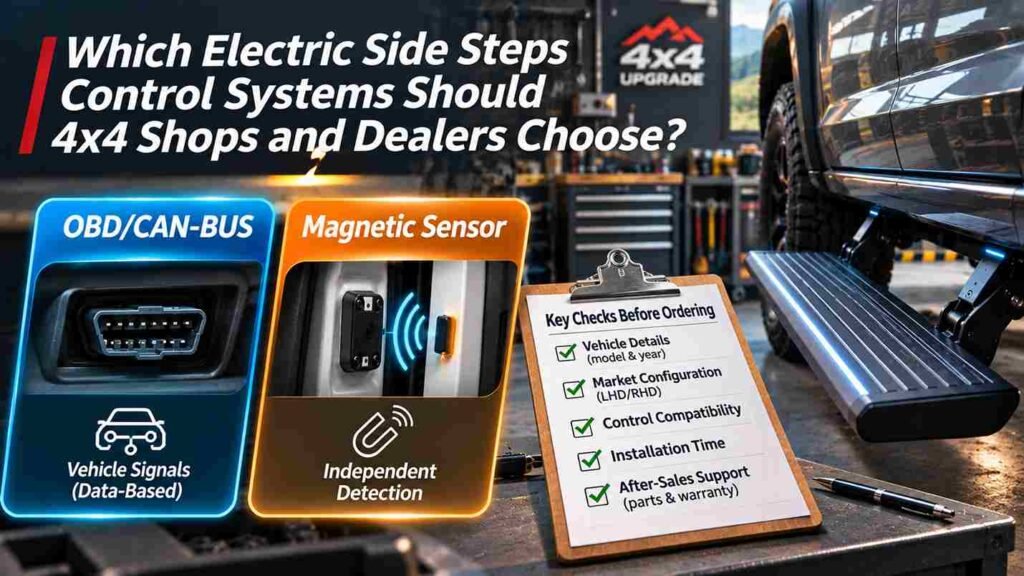
The right control system depends on the vehicles a shop serves, installation requirements, and after-sales support. Dealers should compare OBD/CAN-BUS and magnetic sensor options based on their customers’ needs rather than choosing one technology for every vehicle.
The following table helps dealers identify key factors for different business situations.
| Business Situation | What Dealers Should Prioritize |
|---|---|
| Modern pickup or SUV | Verified electronic signal compatibility |
| Older 4×4 vehicle | Available vehicle signals and independent sensor options |
| Modified off-road vehicle | Electronic compatibility and physical installation conditions |
| Workshop with frequent installations | Installation time and consistent fitment |
| Dealer covering multiple vehicle models | Vehicle-specific compatibility information |
| Importer planning bulk orders | Technical documentation and after-sales support |
For example, a workshop that installs electric steps on several pickup models each week may prioritize consistent installation times. An importer serving older 4×4 vehicles may need more flexible control options.
Neither OBD/CAN-BUS nor magnetic sensor control is automatically better. Dealers should consider vehicle compatibility, installation efficiency, maintenance risks, and customer requirements before making a purchase.
What Should Dealers Confirm Before Ordering?
Before placing an order, dealers should check:
- Vehicle Details: Exact model and production year.
- Market Configuration: Target market and LHD/RHD layout, if relevant.
- Control Compatibility: Confirmed support for the target vehicle.
- Installation Time: Estimated time based on a similar vehicle installation.
- After-Sales Support: Technical assistance, replacement parts, and warranty coverage.
These checks help dealers reduce installation problems and select suitable products for their target markets.
How Does MAX Running Board Support Different Electric Running Board Control Systems?
MAX Running Boards provides electric running boards for a wide range of SUVs and pickup trucks. MAX selects suitable control methods based on vehicle compatibility, electronic systems, and installation requirements. The custom magnets Electric Running Boards project also shows MAX Running Boards’ ability to support older 4×4 vehicles with different control needs.
For 4×4 shops, dealers, and importers, MAX Running Boards offers practical support throughout the purchasing process:
- Fitment Verification: Check vehicle models, production years, and control system compatibility.
- Product Information: Provide specifications, installation guidance, and product details.
- Wholesale Support: Offer flexible order quantities and support for bulk purchases.
Contact MAX Running Boards with your target vehicle models, production years, market, and estimated order quantity to request compatibility information and wholesale pricing.
Conclusion
OBD/CAN-BUS and magnetic sensors use different methods to detect vehicle door status. The right choice depends on the vehicle model, production year, and electronic compatibility. MAX Running Boards’ LC80 project shows why independent magnetic sensors may suit older 4×4 vehicles.
Dealers should also consider installation time, reliability, and after-sales support before purchasing.
Contact MAX Running Boards to confirm vehicle compatibility and discuss wholesale electric running board solutions for your business.
References & Community Discussions
- MAX Running Boards: OEM vs Aftermarket Power Running Boards
A comparison of OEM and aftermarket power running boards, covering product differences and purchasing considerations. - Reddit – GMC Sierra: Let’s Talk Power Running Boards
Community discussion about power running boards, installation, and owner experiences. - Ford Tremor Forum: Aftermarket AMP vs Factory Powered Running Boards
Owner discussion comparing factory and aftermarket powered running boards.
