
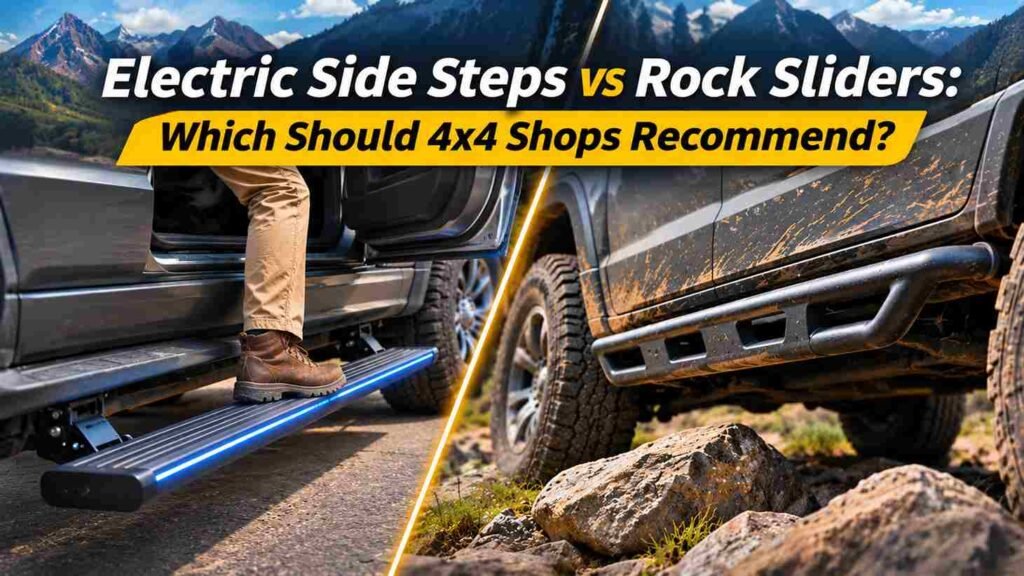
The key difference between electric side steps vs rock sliders is their purpose. Electric side steps help passengers enter and exit SUVs and pickup trucks, while rock sliders protect rocker panels from rocks and obstacles during off-road driving. Although these products may look similar, their functions and structural designs differ.
For 4×4 shops, choosing the right product depends on how customers use their vehicles. Some drivers want easier access, while others prefer off-road protection or a rugged appearance. Dealers must consider driving conditions, passenger needs, and vehicle modifications before making a recommendation. This guide compares their functions, installation requirements, costs, and suitability for different customers.
Electric Side Steps vs Rock Sliders: What Are the Main Differences?
Electric side steps focus on passenger access, while rock sliders focus on vehicle protection. Their main differences include how they operate, where they sit, and how they handle off-road conditions.
What Are Electric Side Steps?
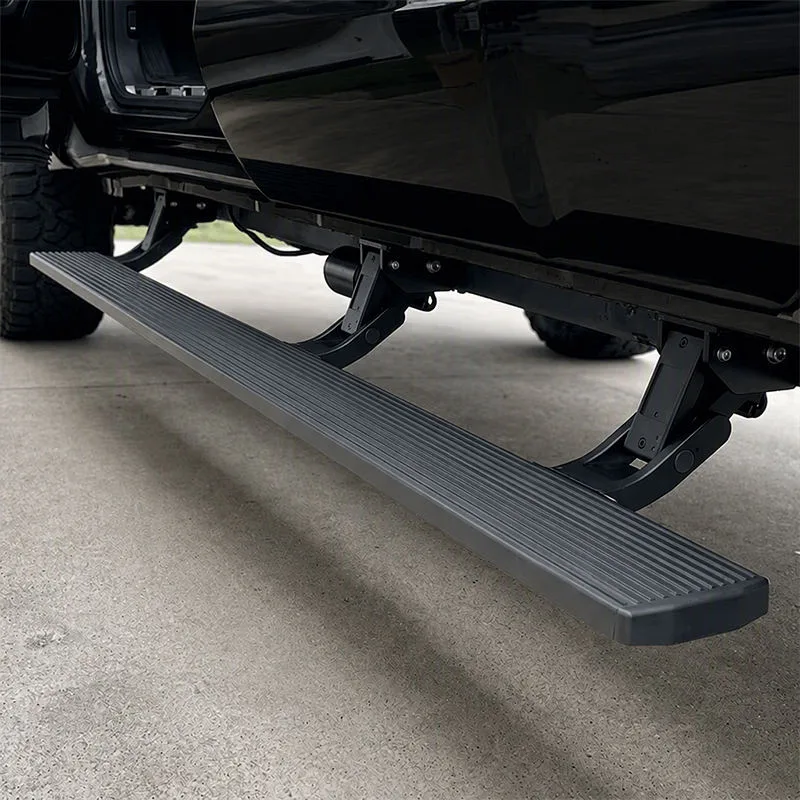
Electric side steps are retractable steps that automatically extend when a vehicle door opens and retract when it closes. When deployed, they provide a lower stepping platform for easier entry and exit. When retracted, they reduce the visible step area and keep the vehicle’s side profile clean.
Electric running boards and power running boards are common names for these products. They are popular accessories for pickup trucks and SUVs, especially for drivers who want easier daily access. However, standard electric side steps are not designed to replace protective rock sliders.
What Are Rock Sliders?
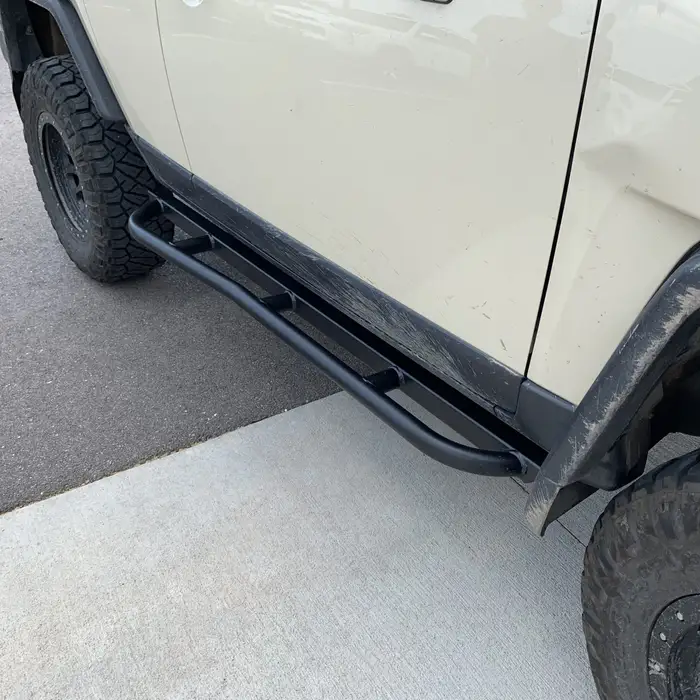
Rock sliders are protective structures mounted along the lower sides of off-road vehicles. Their main purpose is to protect rocker panels from contact with rocks and other trail obstacles. They often use steel tubing or reinforced structures with mounting points designed to handle off-road impacts. Actual protection depends on the materials, construction, mounting strength, and manufacturer testing.
Some rock sliders also provide a fixed stepping surface. However, their higher mounting position often makes passenger access less convenient than a deployed electric step.
Electric Side Steps vs Rock Sliders: Key Differences at a Glance
| Feature | Electric Side Steps | Rock Sliders |
|---|---|---|
| Primary Purpose | Easier entry and exit | Off-road side protection |
| Operation | Automatic retractable | Usually fixed |
| Step Accessibility | Lower when deployed | Often higher |
| Rock Impact Protection | Not generally intended | Designed for specified off-road loads |
| Ground Clearance | Depends on retracted hardware | Depends on design and mounting |
| Installation | Mechanical and electrical | Primarily mechanical |
| Weight | Depends on full kit | Often substantial for steel designs |
| Maintenance | Motors, wiring, linkages | Mounts, coating, structure |
| Purchase Price | Varies by brand and model | Varies by construction |
| Best Application | Daily use and passenger access | Trails with side-contact risk |
How Do Step Height, Ground Clearance, and Protection Affect Product Choice?
Step height, ground clearance, and structural strength affect how side steps perform in daily driving and off-road conditions. Understanding these factors helps 4×4 shops evaluate product performance beyond appearance.
How Much Lower Do Electric Side Steps Extend?
Step drop and ground-to-step height are two different measurements. Both affect passenger access, but they describe different parts of the step’s position.
| Measurement | What It Means |
|---|---|
| Step Drop | The vertical distance the step moves down from its retracted position |
| Ground-to-Step Height | The distance from the ground to the deployed stepping surface |
MAX Electric Side Steps offer a step drop of approximately 9–10 inches (229–254 mm). However, the actual stepping height depends on vehicle design, tire size, and lift kit configuration. Shops should check the deployed height to ensure passengers can enter and exit comfortably.
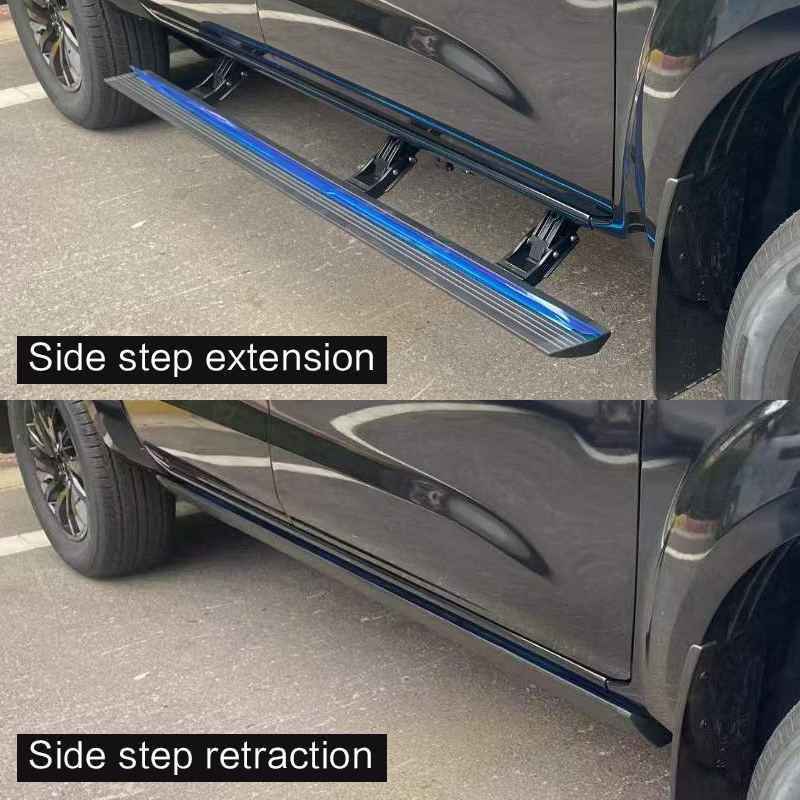
How Do Mounting Positions Affect Ground Clearance?
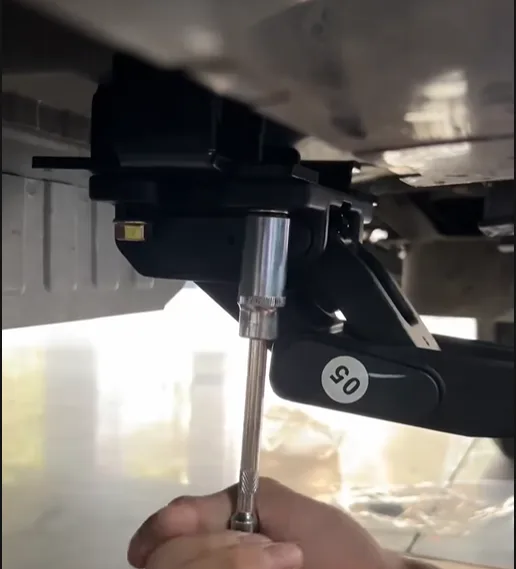
Retractable electric side steps reduce visible side protrusion when closed. However, motors, linkages, and mounting brackets may still extend below the vehicle body and affect ground clearance.
Before installation, 4×4 shops should check:
- Lowest mounting point: Identify components that extend below the vehicle body.
- Lift kit compatibility: Check clearance with suspension modifications.
- Underbody accessories: Confirm that brackets do not interfere with skid plates or other installed parts.
Rock sliders also vary in mounting height, outward extension, and structural design. Shops should assess the complete installed structure rather than judge ground clearance by appearance alone.
Why Doesn’t Step Load Capacity Equal Rock Impact Protection?
Static load capacity and rock impact protection measure different types of performance. A running board that supports passenger weight may still suffer damage from direct rock contact.
| Technical Factor | Step Load Capacity | Rock Impact Protection |
|---|---|---|
| Main Purpose | Support passenger weight | Handle contact with trail obstacles |
| Force Type | Mainly downward load | Impact and forces from different directions |
| Key Factors | Step platform, linkages, brackets | Structure, materials, mounting strength |
| Evaluation | Specified static load testing | Application-specific structural and impact testing |
Material type, tube wall thickness, mounting design, and overall weight can affect performance. However, steel tube diameter, material labels, or static load ratings alone cannot confirm rock impact protection.
Shops should review the manufacturer’s test data and intended use before making protection claims.
Choosing the Right Product for Different 4×4 Customers
4×4 shops should recommend side steps based on how customers use their vehicles, passenger needs, and driving conditions. The right product should solve the customer’s main problem, whether that means easier entry, better off-road protection, or both.
Daily Drivers and Family SUVs
Daily drivers and family SUV owners often prioritize easy access, passenger comfort, and vehicle appearance. A lower stepping platform can make a real difference for children, older passengers, and anyone who struggles to enter a tall SUV or pickup truck.
Electric side steps are usually the better option for these customers. Before recommending a product, shops should check three factors:
- Step height: Is the deployed step low enough for comfortable entry?
- Platform width: Does the step provide enough space for secure footing?
- Vehicle fitment: Is the product compatible with the exact model and year?
Lifted Trucks for Daily Driving and Overlanding
Lifted trucks often serve as daily vehicles and weekend adventure builds. Their owners may need easier entry while keeping enough clearance for off-road travel.
The best recommendation depends on where the customer drives:
- Roads and easy trails: Electric side steps offer convenient access for daily use.
- Rocky trails and deep ruts: Rock sliders are a better choice when side contact is likely.
- Mixed driving with protection needs: Consider combination products with verified off-road protection.
Shops should ask customers about their usual terrain rather than recommend products based on lift height or appearance alone.
Rock Crawling and Technical Off-Roading
Rock crawling often involves direct contact with rocks, tree stumps, and other obstacles. For these customers, rocker panel protection matters more than a lower stepping position.
Vehicle-specific rock sliders are generally the preferred choice. Shops should confirm the mounting design, intended protection level, and manufacturer’s specifications before installation.
Standard electric side steps should not be recommended as substitutes for protective rock sliders in demanding off-road conditions.
Customer Recommendation Matrix
| Customer Profile | Recommended Product | Main Priority |
|---|---|---|
| Family SUV | Electric Side Steps | Easy entry |
| Daily Pickup | Electric Side Steps | Convenience |
| Lifted Street Truck | Electric Side Steps | Lower stepping access |
| Light Overlanding | Depends on terrain | Clearance and protection |
| Rocky Trail Driving | Rock Sliders | Rocker protection |
| Rock Crawling | Rock Sliders | Structural protection |
Can Electric Side Steps and Rock Slider Protection Work Together?
Some aftermarket products combine retractable steps with protective rock slider structures. However, buyers must distinguish between products built for off-road protection and electric side steps that simply have a rock slider-style appearance.
Powered Rock Sliders: Combining Access and Protection
Powered rock slider combinations use a protective outer structure with a retractable stepping platform. The goal is to provide easier passenger access while protecting the vehicle’s rocker panels during off-road driving.
These products may have more complex mounting systems, higher purchase prices, and additional maintenance needs compared with fixed rock sliders.
Before purchasing, 4×4 shops should verify:
- Protective structure: Does the product include a structure built to handle off-road contact?
- Mounting system: How does the structure connect to the vehicle?
- Manufacturer claims: What protection levels and test results does the supplier provide?
A product name alone cannot confirm rock slider protection.
Rock Slider Style Electric Side Steps: Appearance vs Protection
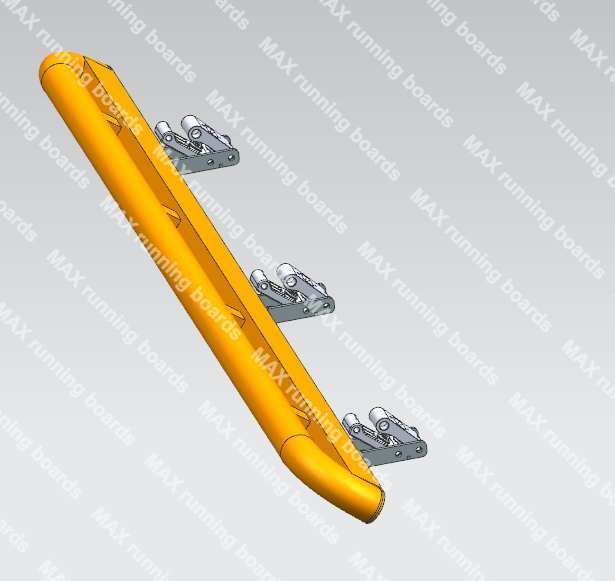
Rock slider style electric side steps focus on rugged styling and passenger access. Round tubes and protective bar-style designs may resemble traditional rock sliders, but appearance does not prove impact resistance.
MAX Running Boards offers Custom Rock Slider Style Electric Side Steps that combine automatic retractable steps with a rock slider-inspired design. They suit 4×4 upgrade projects where customers value both off-road styling and convenient entry.
These products should not be presented as protective rock sliders without verified testing.

Electric Running Boards vs Rock Sliders: What Should 4×4 Shops Check Before Selling?
Before selling electric side steps or rock sliders, 4×4 shops should check vehicle fitment, installation requirements, total costs, and after-sales support. These factors affect profit margins, installation efficiency, and customer satisfaction.
Vehicle Fitment and Installation Requirements
Incorrect fitment can lead to installation delays, extra labor costs, and customer complaints. Before ordering, shops should verify:
- Vehicle details: Make, model, year, cab configuration, and wheelbase.
- Steering position: LHD or RHD, where relevant.
- Existing modifications: Lift kits, OEM side steps, skid plates, and other underbody accessories.
Electric side steps usually require mounting brackets, electrical connections, and operation testing. Rock sliders mainly involve mechanical mounting, although some designs require drilling or professional installation.
Shops should review vehicle-specific instructions before quoting installation costs.
Product Prices and Installation Costs
Prices vary by brand, vehicle model, construction, and features. Rock sliders are not always more expensive than electric side steps.
The following table compares reference prices from the US and Australian markets with MAX Running Boards supplier quotations.
| Product Type | Brand | Reference Price |
|---|---|---|
| Traditional Rock Sliders | Rock Slide Engineering | USD 499.99 (sale) |
| Traditional Rock Sliders | RCI Offroad | USD 1,274+* |
| Electric Side Steps | AMP Research | USD 1,849.99+* |
| Electric Side Steps | Dirty 4×4 (Australia) | AUD 1,990 |
| Electric Side Steps | MAX Running Boards | USD 550/set |
| Custom Rock Slider Style Electric Side Steps | MAX Running Boards | USD 751/set |
Prices are reference figures for November 2026 and require confirmation before publication. Competitor prices represent retail references for different vehicle applications, while MAX prices are supplier quotations. Shipping, taxes, installation, and trade terms may differ.
Electric side step installation includes mechanical mounting, wiring, and functional testing. Rock sliders mainly require structural mounting, but heavy designs may need additional labor or drilling.
For B2B buyers, the purchase price is only one part of the total cost. Dealers should calculate:
Total Landed and Installed Cost = Product Cost + Shipping + Import Duties and Taxes + Installation Labor + Expected After-Sales Costs
MAX offers standard electric side steps from USD 550/set and Custom Rock Slider Style Electric Side Steps at USD 751/set as quotation references. Dealers should compare their actual costs with local retail prices before estimating profit margins.
Maintenance and After-Sales Support
Maintenance requirements differ between electric side steps and rock sliders.
- Electric side steps: Inspect motors, controllers, wiring, and moving linkages. Remove mud, snow, and debris according to manufacturer instructions.
- Rock sliders: Check mounting bolts, structural damage, and protective coatings, especially after contact with trail obstacles.
Before purchasing, shops should confirm warranty coverage, replacement parts, maintenance instructions, and supplier support policies.
Reducing Inventory and Fitment Risk
Dealers should select inventory based on local vehicle demand and confirmed product fitment. High vehicle sales do not always mean strong demand for electric side steps.
For new vehicle applications, testing a sample before bulk purchasing can help identify fitment or installation issues.
Shops should also review supplier lead times, technical documentation, replacement parts availability, and minimum order quantities. Flexible purchasing options help dealers serve more vehicle models without holding unnecessary stock.
How MAX Running Boards Supports 4×4 Shops and Dealers
MAX Running Boards offers two product options for different 4×4 upgrade projects:
- Standard Electric Side Steps: Reference price of USD 550/set, providing convenient entry and exit for SUVs and pickup trucks.
- Custom Rock Slider Style Electric Side Steps: Reference price of USD 751/set, combining automatic retractable steps with rugged off-road styling. These products are not marketed as protective rock sliders.
MAX supports a wide range of SUV and pickup truck models, with a minimum order quantity (MOQ) of 1 set for standard products. MAX Running Boards also offer OEM and ODM development, wholesale supply, and worldwide shipping. Custom development projects have separate MOQ requirements based on the vehicle and design.
Are you a 4×4 shop, dealer, or importer? Share your target vehicle models, model years, sales market, and estimated order quantity with MAX Running Boards to receive our product catalogue and a formal quotation.
Conclusion
The choice between electric side steps vs rock sliders depends on customer needs. Electric side steps suit drivers who prioritize easy entry and exit, while rock sliders are better for vehicles that need off-road side protection. Rock slider style electric side steps offer retractable convenience and rugged styling, but should not be considered protective rock sliders without verified testing.
4×4 shops and dealers can contact MAX Running Boards for product catalogues, vehicle fitment information, and wholesale quotations to find suitable electric side steps for their customers.
References
[1] MAX Running Boards: “Types of Side Steps for Trucks” –
https://maxrunningboards.com/types-of-side-steps-for-trucks/
[2] MAX Running Boards: “Rock Slider Style Electric Side Steps for Australian 4WD Shops: A Buying Guide” –
https://maxrunningboards.com/rock-slider-style-electric-side-steps/
[3] MAX Running Boards: “Power Running Board Use Cases” –
https://maxrunningboards.com/power-running-board-use-cases/
[4] MAX Running Boards: “Power Running Board Drop Height Guide” –
https://maxrunningboards.com/power-running-board-drop-height-guide/
[5] MAX Running Boards: “Power Running Boards vs Side Steps” –
https://maxrunningboards.com/power-running-boards-vs-side-steps/
[6] MAX Running Boards: “Power Running Boards Ground Clearance” –
https://maxrunningboards.com/power-running-boards-ground-clearance/
[7] Ram Forum: “Power Steps or Rock Sliders” –
https://www.ramforum.com/threads/power-steps-or-rock-sliders.194727/
[8] Reddit r/ToyotaTacoma: “Rock Sliders vs Running Boards” –
https://www.reddit.com/r/ToyotaTacoma/comments/18fjbgo/rock_sliders_vs_running_boards/
