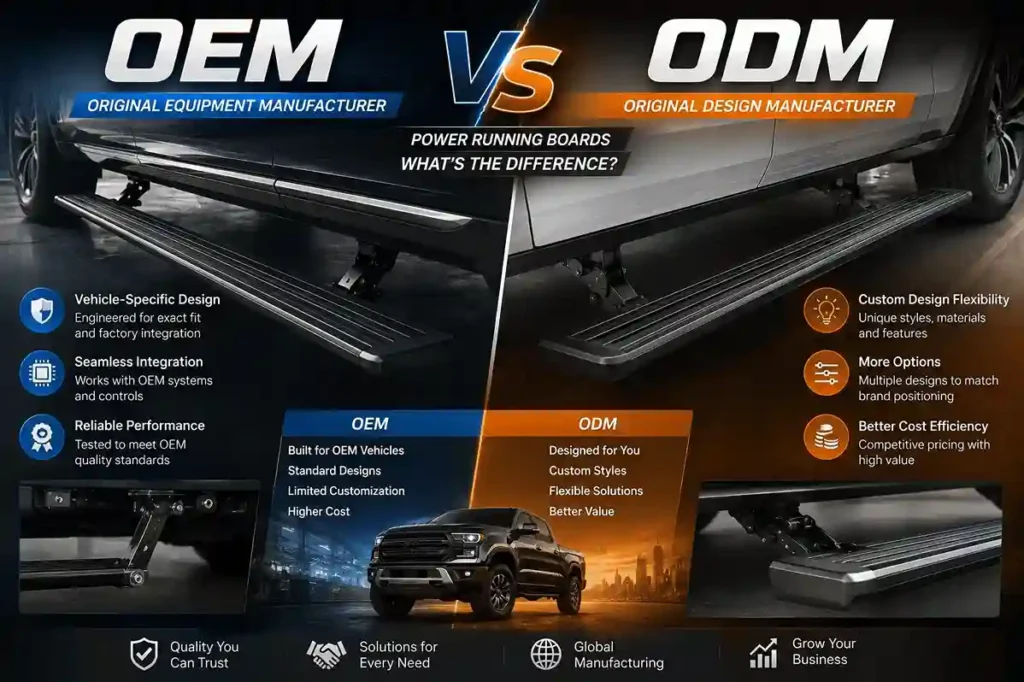
OEM vs ODM power running boards can mean different things in the automotive parts industry. Many suppliers use these terms differently, which can confuse B2B buyers.
For power running boards, OEM can involve customer-defined designs, replacement products, or OE supply. ODM usually gives the manufacturer a larger role in product development.
So, which model fits your business?
This guide explains OEM and ODM power running boards, their key differences, project workflows, and how to choose the right manufacturer.
What Is OEM for Power Running Boards?
OEM power running boards can refer to different types of cooperation. The exact meaning depends on who defines the product, who handles engineering, and how the product enters the market.
Automotive OEM / OE Supply
Automotive OEM/OE supply is the traditional OEM model. It usually involves vehicle manufacturers, automotive companies, Tier suppliers, or vehicle program customers.
The running board must meet the vehicle program’s engineering and validation requirements. The customer reviews and approves the product before mass production.
A typical project follows this process:
Vehicle Manufacturer → Product Requirements → Engineering Review → Sample Development → Testing & Validation → Approval → SOP → Mass Production
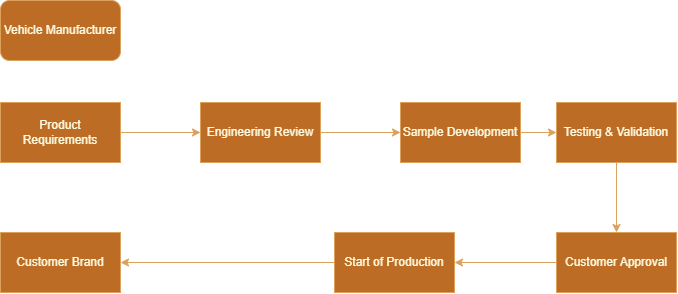
The factory handles engineering and production based on the program requirements. Vehicle integration, testing, approval, and SOP are key parts of the project.
OEM Replacement / OEM-Style Power Running Boards
OEM replacement means the customer needs a power running board to replace an original product. The main focus is correct vehicle fitment and matching the required product specifications.
The engineering team may check:
- Original product
- Dimensions
- Mounting position
- Vehicle fitment
- Functions
- Specifications
OEM-style products are different. They are aftermarket products that aim to match the original product style, mounting position, dimensions, or functions where required.
OEM-style does not necessarily mean a genuine OEM product. If the original design or technical data is protected, the project should use legal authorization or legal technical information.
The goal is to match the original product as closely as required while maintaining proper vehicle fitment.
Custom OEM Power Running Boards Based on Customer Drawings
In a custom OEM project, the customer has already defined the product. The customer may provide technical drawings, dimensions, materials, performance requirements, or mounting requirements.
The factory then takes the product through:
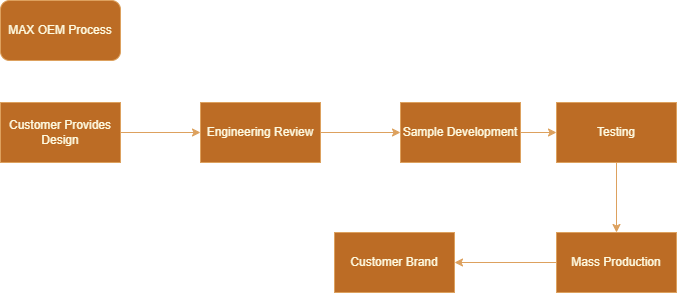
The customer does not need to develop every engineering detail. For example, a customer can provide the product concept and key requirements while the factory handles the engineering work needed to make the product ready for production.
The customer defines the product. The factory turns those requirements into a manufacturable product.
Advantages of OEM Power Running Boards
OEM power running boards give B2B customers more control over the final product.
- Higher Product Control — The customer can define key product features, materials, dimensions, and performance requirements.
- Stronger Product Differentiation — A customer-defined product can give a brand a clear difference from standard aftermarket products.
- Better Fit for Specific Requirements — The factory can develop the product around specific vehicle, mounting, function, or market requirements.
Disadvantages of OEM Power Running Boards
OEM power running boards also require more resources from the customer and manufacturer.
- Higher Development Cost — Custom engineering, samples, testing, and tooling can increase the project cost.
- Longer Development Time — Design review, sample development, testing, and approval take more time than using a standard product.
- More Engineering Work — The project may require more work on drawings, vehicle fitment, materials, functions, and performance requirements.
What Is ODM for Power Running Boards?
ODM gives the manufacturer a larger role in product design and development. The customer provides the product direction, while the factory handles more of the engineering work.
What Does ODM Mean for Power Running Boards?
For an ODM power running boards project, the customer may provide:
- Vehicle application
- Product concept
- Target market
- Desired appearance
- Required functions
- Target price
The manufacturer may handle:
- Product design
- Engineering
- Bracket development
- Sample development
- Testing
- Production
For example, a customer may say, “We need a power running board for this vehicle, with these functions and a target price.” The factory then develops the product based on those requirements.
The key difference is simple: the customer defines what they need, while the manufacturer takes a larger role in deciding how to build it.
How Does ODM Power Running Board Development Work?
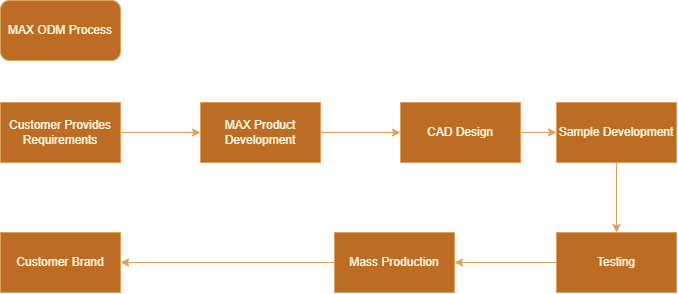
An ODM power running board project usually starts with the customer’s requirements. The manufacturer then handles more of the product design and engineering work, develops the sample, completes testing, and submits the product for customer approval before mass production.
Advantages of ODM Power Running Boards
ODM can reduce the development work required from the customer.
- Lower Development Burden — The manufacturer handles more design and engineering work.
- Faster Product Development — The factory can move directly from requirements to product development.
- Lower Upfront Development Investment — The customer may avoid some early design and engineering costs.
- Access to Manufacturer Engineering Experience — The customer can use the factory’s experience in product design, vehicle fitment, brackets, and production.
Disadvantages of ODM Power Running Boards
ODM also gives the customer less control over some parts of the product development process.
- Less Control Over Product Design — The manufacturer has a larger role in deciding the product structure and design.
- Product Differentiation May Be Limited — Similar ODM products may be offered to other customers unless exclusivity is agreed.
- Exclusivity Needs to Be Clearly Defined — The customer should discuss and define exclusivity before development. The agreement should clearly state whether the product, design, vehicle application, or market is exclusive.
OEM vs ODM Power Running Boards: Key Differences
OEM and ODM power running boards can follow different development models, but the difference is not always clear from the product itself. The main differences usually involve product definition, design responsibility, engineering work, development cost, and customer involvement.
The table below compares the two models across the key factors that matter in a B2B power running board project.
OEM vs ODM: Key Differences
| Factor | OEM | ODM |
|---|---|---|
| Product Definition | Customer-defined | Customer requirements + manufacturer-led development |
| Design Responsibility | Mainly customer-defined | Mainly manufacturer-led |
| Engineering | Supplier supports defined requirements | Manufacturer takes a larger role |
| Customization | High | Moderate to high |
| Development Time | Usually longer | Usually faster |
| Upfront Development Cost | Usually higher | Usually lower |
| Product Differentiation | Higher | Depends on customization |
| Customer Involvement | Higher | Lower |
| Best For | Defined product requirements | Customers needing development support |
OEM and ODM Are Not Simply “Customer Design vs Factory Design”
OEM does not mean the manufacturer has no role in design. The factory may still provide engineering support, improve manufacturability, develop brackets, build samples, and solve vehicle fitment issues.
ODM does not mean the customer has no product requirements. The customer can define the vehicle application, functions, appearance, target price, or other key requirements.
Many real B2B projects also sit between OEM and ODM. The customer may provide part of the design while the manufacturer handles the rest of the engineering and development.
The key difference is who takes the primary responsibility for product definition and development.
OEM vs ODM: Which One Is Right for Your Business?
The right model depends on how you plan to sell the product, how much control you need, and how much development support you expect from the manufacturer. A distributor may need a ready-to-sell product, while a 4×4 modification shop may need vehicle-specific development.
1.Distributor or Wholesaler
Distributors and wholesalers usually focus on bulk purchasing, wholesale sales, dealer networks, and resale.
If an existing power running board already meets your requirements for vehicle coverage, quality, price, and functions, a private label model may be enough.
If you need product adjustments or development support, ODM can be a better fit.
A distributor that mainly wants to wholesale and resell does not necessarily need a full custom OEM project.
2.4×4 Modification Shop
A 4×4 modification shop may offer complete vehicle customization, including suspension, wheels, tires, bumpers, lighting, roof accessories, and power running boards.
If you simply want to add power running boards to your product range, an existing product, private label, or ODM model may work well.
If you want the running board to become part of your own vehicle modification package, a custom OEM, ODM, or hybrid project may be a better option.
The project may involve:
- Custom board design
- Custom brackets
- Vehicle-specific fitment
- Mounting position
- Dimensions
- Appearance
This approach gives the shop more control over how the running board fits its complete vehicle package.
3.Automotive Accessory Brand
An automotive accessory brand may want to build its own power running board product line.
If you already have a complete product design, OEM is a suitable model.
If you have a product concept but need the manufacturer to handle more of the design and engineering work, ODM may be a better choice.
If you also want your own brand on the product, you can use:
- OEM + Private Label
- ODM + Private Label
For more details, see our guide on How to Customize Electric Running Boards for Your Brand.
4.Vehicle Manufacturer or Automotive Company
If the power running board is intended for a vehicle program, the project is different from normal aftermarket resale.
The focus is usually on Automotive OEM / OE Supply, including:
- Vehicle integration
- Engineering
- Validation
- Approval
- SOP
- Mass production
The manufacturer must work according to the vehicle program requirements and support the required development and validation process.
5.If You Have a Product Idea but No Complete Design
You may know what you want to sell without having a complete product design.
For example, you may want to develop a new power running board for a specific SUV but do not have:
- Board design
- Bracket solution
- Engineering drawings
In this case, ODM is usually a better fit. You provide the product direction and requirements, while the manufacturer takes a larger role in design and engineering.
6.If You Already Have a Defined Product Design
If you already have the product design, technical drawings, dimensions, materials, and performance requirements, OEM is usually a better fit.
The manufacturer can then take the defined product through:
Engineering → Sample → Testing → Production
The customer keeps greater control over the product definition, while the manufacturer provides the engineering and production support needed to make the product ready for production.
Can OEM, ODM, and Private Label Be Combined?
Yes. OEM, ODM, and private label describe different parts of a B2B product relationship.
| Term | Main Question |
|---|---|
| OEM | How is the product defined and developed? |
| ODM | Who takes the main role in product development? |
| Private Label | Whose brand is used on the product? |
These models can be combined. Common examples include:
- OEM + Private Label
- ODM + Private Label
- OEM + ODM hybrid
For example, a customer may provide the main product design while the manufacturer handles part of the engineering and development. That project can combine elements of both OEM and ODM.
Private label is a branding arrangement, not a direct alternative to OEM or ODM.
How Does an OEM or ODM Power Running Board Project Work?
Once the cooperation model is confirmed, an OEM or ODM power running board project usually follows a clear development process.
Product Requirements → Engineering Review → Design & Development → Sample Development → Testing & Approval → Mass Production → Quality Control & Delivery
1.Define Product Requirements
The project starts with the product requirements. These may include the vehicle make, model, model year, body configuration, product type, dimensions, material, load requirements, brackets, quantity, target market, logo, and packaging requirements.
2.Engineering Review
The manufacturer reviews the vehicle and product requirements before development. The engineering team checks chassis mounting points, available space, bracket position, board dimensions, installation requirements, and vehicle fitment.
For different vehicle models and model years, custom power running boards for different vehicles may require vehicle-specific engineering and fitment solutions.
3.Design and Development
The development process depends on the cooperation model. For OEM, the customer provides defined product requirements and the supplier provides engineering support. For ODM, the customer provides the requirements while the manufacturer takes the lead in design and engineering.
4.Sample Development
The manufacturer builds a Sample for evaluation. The team checks the brackets, vehicle fitment, installation, and appearance to confirm that the product meets the requirements.
5.Testing and Sample Approval
The Sample is tested for fitment, function, durability, load, and environmental performance. The process then follows:
Testing → Customer Review → Sample Approval
6.Mass Production
After Sample approval, the manufacturer confirms the final specifications, approved Sample, packaging, quantity, and production schedule. The project then moves into mass production.
7.Quality Control and Delivery
The manufacturer performs quality inspections during production and a final inspection before shipment. The finished products are then packaged and prepared for delivery.
How to Choose an OEM or ODM Power Running Board Manufacturer?
Choosing an OEM or ODM power running board manufacturer is not only about comparing prices. You also need to consider development capability, vehicle-specific experience, testing, manufacturing capacity, and private-label support.
| What to Check | Why It Matters |
|---|---|
| OEM & ODM Development Capability | The supplier should support product development, engineering, brackets, and samples. |
| Vehicle-Specific Development Experience | Different SUVs, pickups, 4×4 vehicles, and model years may require different fitment solutions. |
| Sample & Testing Capability | Samples should be checked for fitment, function, durability, load, and other project requirements. |
| Manufacturing Capability | The supplier should have stable production, quality control, and the capacity for mass production. |
| Private Label & Packaging Support | The supplier should support logos, packaging, labels, and other brand requirements when needed. |
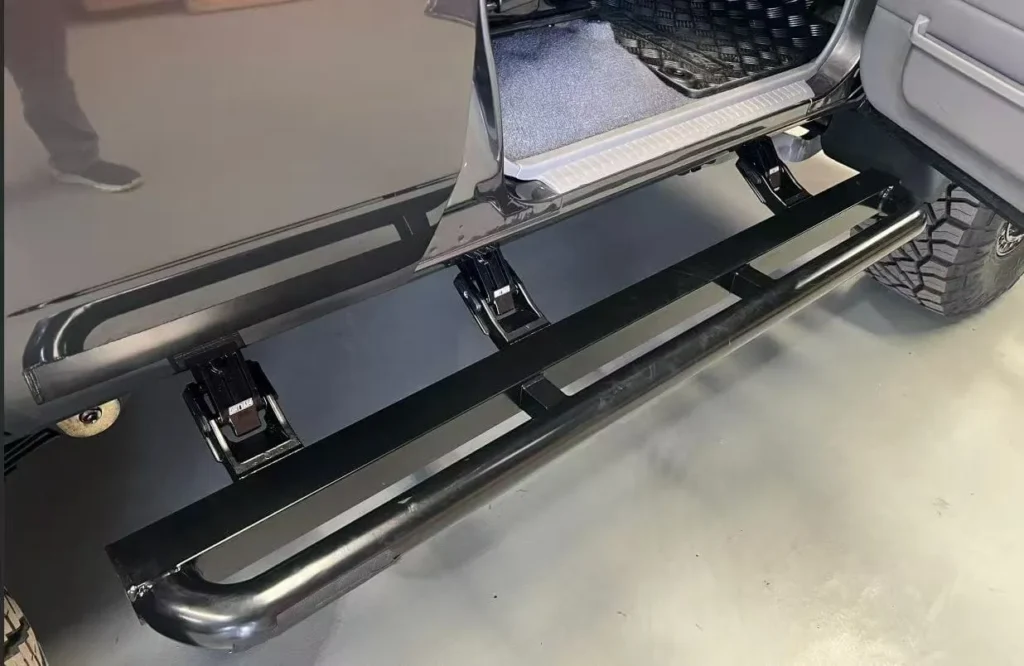
MAX Running Boards is a manufacturer specializing in electric and power running boards for SUVs, pickups, and 4×4 vehicles. We support OEM and ODM projects from product development and vehicle-specific fitment to sample development, testing, and mass production.
Our capabilities include vehicle-specific development, bracket development, sample development, product testing, and mass production. We also support private-label requirements such as brand logos and custom packaging for B2B customers. Learn more about MAX power running boards OEM Services.
Conclusion
OEM and ODM power running boards fit different project needs. OEM works well when the product and key requirements are already defined. ODM works well when the customer has a product concept but needs more design and engineering support from the manufacturer.
MAX Running Boards provides custom electric running board solutions for SUVs, pickups, and 4×4 vehicles. MAX Running Boards supports vehicle-specific fitment, engineering, bracket development, sample development, testing, mass production, and brand customization.
Custom Electric Running Board Solutions for Your Project
Contact MAX Running Boards for a custom electric running board solution for your project. Send the vehicle make, model, model year, and product requirements. MAX Running Boards can review the project and develop a suitable solution based on the vehicle, design, functions, and branding requirements.
